Showing posts with label Flood Management. Show all posts

New Bird Species at Honeydale


Richard Broughton was at Honeydale this weekend conducting a bird survey, with very pleasing results - two new species were recorded at the farm: A pair of coots have arrived and are building a nest on the pond and a Sedge Warbler was seen singing next to the pond. This is further proof that the creation of the wetland area is really paying off; the number of breeding species has increased by around 15% in the few years it’s been there. Canada Geese are sitting on eggs on the small island, and there are at least two (maybe three) pairs of Reed Buntings nesting around the pond area. Moorhens are still present (Richard heard one calling from the sedges) and Mallard feathers are on the water, (and have bred in previous years). None of those species were present before, and their arrival is purely down to the wetland creation.


Elsewhere, there's a pair of Kestrels nesting in a broken Ash tree at the bottom of the sheep field (opposite corner from the pond). Also a pair of Red Kites are very much at home (probably non-breeding first-years - they don't generally breed until 2 yrs old), 4 Buzzards, 2 Yellow Wagtails and at least three Lesser Whitethroats (the highest total so far). Two Willow Warblers were also recorded - only the second sighting - although they were silent and probably passing through on migration.


Busy September at Honeydale

As we head into Autumn, there’s been plenty going on at Honeydale Farm.

Mid-September, we drilled mustard into the control plots of spring barley as a cover crop. This is a Cover crop that’s been used across Honeydale for many years and we’re keeping the trial plots so that we can compare results with the eight year crop rotation we’ve implemented. The mustard germinated by 22nd September, will die off over the winter and the residual will be ploughed up in March.


The year seven crop of our eight year rotation is spring planted wild bird seed mixes which are already being put to good use, providing a supply of food during the hungry gap. We will be repeating the experiment we did last year, comparing the benefits of these sown bird plots with supplementary feeding.

We’ve also been trailing a mixture of game cover and wild bird crops, looking at combining long lasting cover over the winter with the addition of sources of food for farmland birds. The mixtures, some of which includes sunflowers, millet and mustard for food and sorghum and brassicas for cover, were sown in June and are looking good, so we may have new mixes to purchase through Cotswold Seeds before too long.


We’ve sowed and rolled a pathway seed mix around the area we are establishing as a novel crop trials area. The seed mix includes meadow grass, ryegrass, fescues, bentgrass and wild white clover and was drilled in three different directions in order to create a thick and dense covering that’s robust enough to cope with being trodden on. 


On the 24th September we combined the sainfoin. It was cut for hay in spring, allowed to regrow and set seed and after combining it’s now being cleaned in the Cotswold Seeds warehouse. It’s a special variety seedstock for multiplication.


A couple of days later, we welcomed 35 PhD students from Oxford University to Honeydale. This varied group of post graduates included specialists in water and insects and they were all interested in studying the diverse farm as an ecosystem. In the final days of September the water in the bottom scrape was successfully holding the water and providing a habit for many aquatic species. 


Our herbal ley was also sown at the end of June, with a cover crop of Buckwheat to act as a nurse to help it establish, and the sheep have enjoyed grazing it over the summer. In the first week of October we topped it to remove the stalky and fibrous stems in preparation winter.


Wild Trout Trust Award

"Incredibly smart work" is how the judges of the Wild Trout Trust Conservation Awards described the Natural Flood Management at Honeydale Farm. Ian Wilkinson, farmer at Honeydale and MD of Cotswold Seeds, attended the awards ceremony at The Savile Club in London this week, along with other nominees. The Wild Trout Trust is a conservation charity that supports and encourages projects to improve and protect habitats in and around rivers and lakes, and nominees were chosen for their practical work to improve wetland habitats for trout and all wildlife across the UK and Ireland. 


The Natural Flood Management Scheme at Honeydale involved rerouting a natural spring to create a series of leaky dams and scrapes as well as the planting of trees to create wildlife habitats and help prevent flooding in the catchment area of the Evenlode River.

Woodland Trust Workshop Visits Honeydale


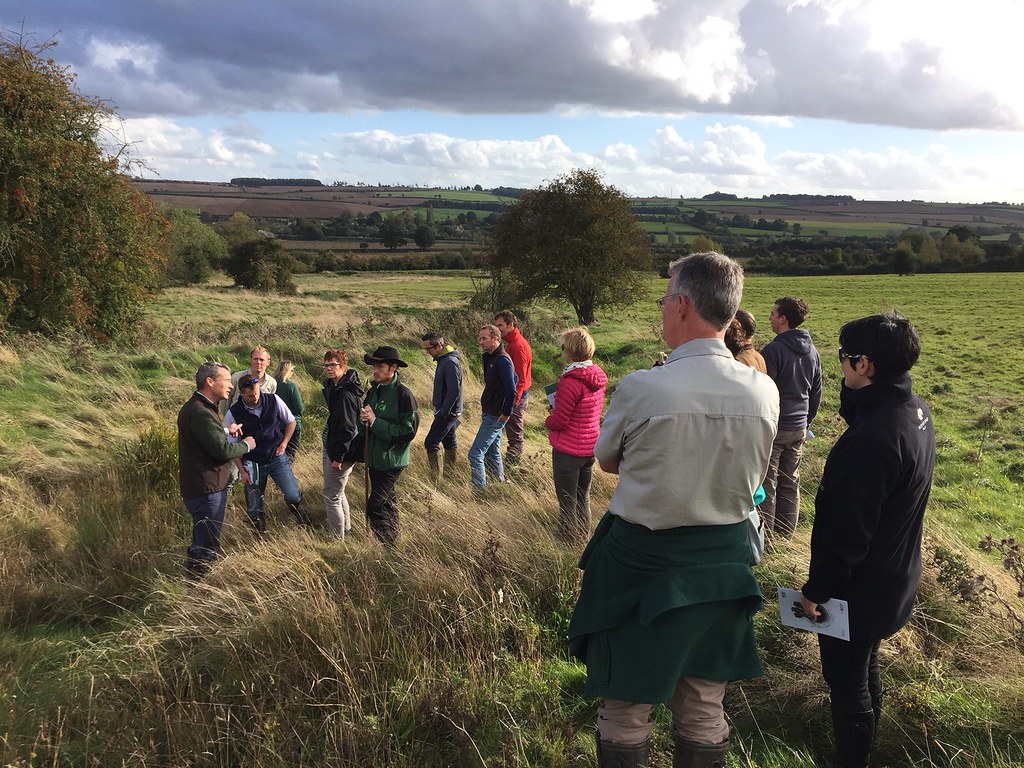
A delegation from The Woodland Trust visited Honeydale Farm as part of its Oxfordshire Focus Area Workshop, looking at the region’s particular challenges and opportunities. They were joined by Alistair Yeomans of the Sylva Foundation and Sharon Williams, Wychwood Project Director and member of the Evenlode Catchment Partnership. The group were interested in the natural flood management project at Honeydale, and how it has involved the planting of trees and creation of areas of wetland to deliver NFM. Farmer and MD of Cotswold Seeds Ian Wilkinson along with manager Paul Totterdell discussed crop rotation, tree-planting and natural flood management in the wider context of diversity on the farm and how trees and water can be used as natural capital, bringing a range of benefits.


Testing the Water, Mob Grazing, Ploughing and Scattering

Testing the Water

Following our participation in last year’s Thames Water Blitz, organised by Wild Oxfordshire and Earthwatch, we again tested the water at Honeydale.

The tests determine levels of nitrate and phosphate and a range of samples were taken across the ponds, dams, stream and spring that comprise the new flood alleviation waterworks on the farm.


The nitrogen levels were high and the phosphate low, which is what is to be expected based on last year’s results. But we are fixing our own nitrogen with sainfoin, green manures and grass leys so will be monitoring levels closely now and we are confident that our new farming system will not be adding to the problem, and is a method that should, over time, help to reduce water soluble nitrogen in rivers.

Mob-Grazing Moving On

Now the electric fencing is all in place, we are moving the sheep, thirty ewes and sixty lambs, every day. It’s only taking about twenty minutes a time. After two weeks the sheep now know what to do, and and as soon as the fence moves and they can see their way open to lush ungrazed herbal ley, they walk on through, follow each other just like...sheep!

Mob grazing moving on
One maintenance job we have to complete every two weeks is mowing under the fences with the Allen Scythe to make sure the grass does not grow too tall to touch the wire and earth it.

We’re also addressing the issue of bringing drinking water to the different areas as the sheep are moved. We’ve installed a bowser with a 1000 litre capacity which is pumped full from the spring and we are awaiting delivery of plastic tubing which will be run in a loop around the field with branch lines into each area. All we’ll have to do then is move the small empty trough each day, and in the future when different fields are given over to pasture in the rotation, we can simply move the water pipe to the new areas. 

The Sheep have been enjoying grazing the Sheep’s Parsley in the Herbal Ley

We plough the fields and scatter….

Our arable fields were planted with Summer Quick Fix green manure which we over-wintered and ploughed a couple of weeks ago and have now power harrowed, rolled and planted with cereals; spring wheat, spring oats and spring barley. After sowing the spring wheat we’ve sown our standard mix of yellow trefoil and white clover under it as an intercrop. This will act as a soil improver and to be grazed after the wheat has been harvested.

Ploughing in Summer Quick Fix Green Manure in Arable Field Summer
Sam drilling spring barley next to sainfoin
Ring rolling after power harrow before drilling
Rolling intercrop with flat roller
Watering sheep
Rye/Vetch - Sown last Autumn
Allen Sythe


Flood Alleviation Video

We took the drone to the farm to show off the Honeydale flood alleviation works from a different angle

David Cameron Visits Honeydale Farm

Prime Minister and local MP, David Cameron visited Honeydale Farm to see the simple and newly created natural flood management works there, and learn how such schemes on farms can help prevent flood events downstream.


Addressing the controversial issue of paying farmers to flood land, the approach demonstrated at Honeydale, an experimental farm owned by Cotswold Seeds located near Shipton-under-Wychwood, uses less land and has a lower financial cost than other methods.

Experts were on hand to demonstrate how the simple scheme here, if replicated over a large number of farms, would have a significant effect on the fifteen million people further down in the Thames Valley.


Mr Cameron was met by the owners of Honeydale Farm, Ian and Celene Wilkinson, before listening to short talks by Dave Gasca, Hydrologist from the Evenlode Catchment Partnership, Hilary Phillips of Wild Oxfordshire and Sharon Williams of the Wychwood Project, which helped plant the trees surrounding the newly formed water catchment pond.


Mr Cameron was then taken on a short walk from the spring head down past the ponds and dams to the scrape, which gave Ian Wilkinson the opportunity to explain how, as a landowner, it is extremely beneficial to have the ‘natural capital’ of water on the farm. However in order to have it, technical advice was required (from Vaughan Lewis of aquatic resource consultancy Windrush AEC Ltd) together with capital funding from the National Lottery via the Cotswold Rivers Trust which helped pay for the work. Without these, it wouldn’t have happened. Sharon Williams also made a plea for government to make the RPA Basic Payment Scheme work better for the environment and Countryside Stewardship schemes less complicated, less competitive and easier for all farmers to access.

Vaughan Lewis was not able to be present today but was keen for Ian Wilkinson to stress that techniques are available to make a real difference to reduce flooding and these also have multiple benefits in terms of reduction of nutrient and sediment runoff to rivers and increased carbon capture.


‘Their usage could have real financial benefits to our collective economy,’ aquatic consultant Vaughan Lewis has said. ‘Despite this, we currently have no mechanism for delivery at a strategic level, so what is needed is a well thought out and funded mechanism to allow implementation of natural flood management measures at optimum locations to maximise benefits. This could be via a modified agri-environmental system or perhaps a simplified version of Dieter Helm’s Catchment model.’

Mr Cameron, MP for Witney, said: “Flooding has such devastating effects and has been a big challenge in West Oxfordshire. I was pleased to accept the invitation from my constituents to see the natural flood management works undertaken at Honeydale Farm and how they are working.”

Further information:
Fiona Mountain, Cotswold Seeds, 01608 652552 fionam@cotswoldseeds.com
Sharon Williams, Wychwood Project, 01865 815420

Honeydale at Easter

Flood Management

Forgive us for droning on about this, but the drone that flew over Honeydale captured some wonderful footage (watch this space) of our flood alleviation works at full capacity after all the recent rain. Storm Katie has tested the system to the limit and it has continued to be satisfyingly effective. We’re hoping the wetland habitat area will attract more wildlife this year and to help things along a little, we’re introducing frogspawn from a local village donor to the ponds and scrapes. The storm also put paid to our plans to plough the barley strips; it’s been so wet that we’ve had to postpone ploughing to the end of the week.


But there is a change in the air...

The first day of spring, the beginning of British summer time and the Easter weekend has heralded the first signs of fresh growth at Honeydale. We’ve spotted the first wildflowers, a daisy and cowslip and barn owls taking up residence in the boxes.

The young fruit trees in the newly planted orchard, which vary in height from 1ft to 5ft, are also beginning to bud, and the belt of mulch we laid around each tree is doing a good job at weed control. We are keeping the orchard area open with a tractor and flail mower instead of using sheep which have traditionally been used to manage that field but would damage the trees.

Some may have thought we were a little crazy to spin on green manure with a tractor some months ago, but the crop is now growing like mad! We’ll leave it in for another month or so then roll with a crimper roller. So far the weeds are not causing a problem and we’re hoping the rye and vetch will swamp them.


The Herbal Ley is beginning to grow too, and the sainfoin, chicory and birdsfoot trefoil are looking strong. We’re waiting for more growth before putting the sheep on it when it’s been fenced. We’re revising the intensity of the mob stocking; last year we moved the sheep each week but this year they will be moved daily.

We were keen to trial an autumn sown Bumble Bird mix which can be used as an option for countryside stewardship. Usually pollen,nectar and wild bird food sources are sown in the spring, so it was interesting to see what survived the winter and is available to wildlife this spring. The phacelia grew well early on, but was checked by late frost, as has the Gold of Pleasure, a seed bearing plant. They are both still alive. The clovers have grown more slowly but should gather pace as the weather warms up.


In other news…

One of the feral cats has an aptly named cataract, so we’re trying to catch him to take him to the vets, meanwhile a beautiful black cat has turned up at the farm. We’re hoping he brings us good luck for the year ahead, and also that has owner claims him soon. Please let us know if he’s yours.

Honeydale From The Air!

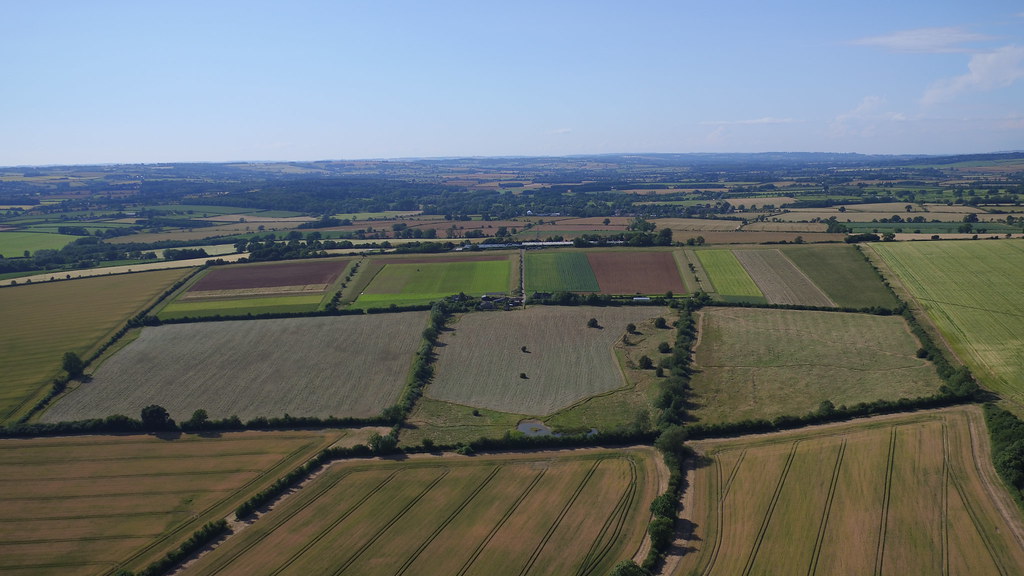
Is it a bird? Is it a plane? No, it’s a drone, which flew up and over Honeydale Farm last week with a camera attached. From an altitude of 500ft it captured some wonderful photography of the wintry fields and spectacularly displays the flood alleviation works, showing how the recent rainy weeks have resulted in water flowing down through the leaky dams to the holding pool at the bottom of the fields.


The darker brown strips in the four top fields are control plots of barley that we are reseeding every year to test the soil in order to monitor how we are improving it with various mixtures of green manures, cover crops and herbal leys on our other fields. It’s also great to see the newly planted Heritage Orchard (the white dots to the right of the photo) from this perspective. Our beehives are also visible to the right of the farm buildings. We hope to be able to send the drone up again over the coming months to show how the farm changes over the seasons.


Cotswold Rivers Trust Demo Day

Last year, with the help of the Cotswold Rivers Trust, we created a natural flood management feature at Honeydale Farm to hold up water flow at peak times and reduce the input into the River Evenlode, as well as creating a more diverse wetland habitat. Since the project at Honeydale provides a small scale, working example of how this type of flood management can be implemented on wider catchments in the UK, we were delighted to welcome representatives from various water and river authorities, councils, and bodies including the Environment Agency, as well local people and flood action groups, to discuss what we had done and it’s wider implications.


The day's events, which began at the Beaconsfield Hall in Shipton Under-Wychwood, were introduced by Trevor Cramphorn, Chairman of Cotswold Rivers Trust, before Ian Wilkinson and Sam Lane talked about the water management works that have been undertaken at Honeydale Farm. This was followed by presentations from waterways management specialist Vaughan Lewis, Dave Gasca, Hydrologist from the Evenlode Catchment Partnership and, Alistair Yeomans, Chartered Forester from the Sylva Foundation who spoke on the topic of Woodlands for Water. The day ended, after lunch and a Q&A session, with a site visit and tour of the works at Honeydale Farm.


Water, Woods & Farming

Last week Ian Wilkinson gave a talk on the flood alleviation project at Honeydale Farm at the ‘Water, Woods and Farming’ event which took place in Ditchley Park, near Charlbury, on the evening before the annual Forest Fair, organised by the Wychwood Project.

The event was attended by around 30 landowners, countryside stakeholders and representatives from organisations including the local water authority and Environment Agency.


Natural Flood Management & Other News

Natural Flood Management


Last winter we created a natural flood management feature to hold up water flow at peak times from the spring and reduce the input into the River Evenlode. The feature also created a more diverse wetland habitat at Honeydale and provides a small scale, working example of how this type of flood management can be implemented on wider catchments in the UK. The Cotswold Rivers Trust under the guidance of waterways management specialist Vaughan Lewis, returned to Honeydale a few weeks ago to carry out some improvements, having observed how it’s performed so far. They dug deeper into the bottom pond to increased it’s capacity and have introduced aquatic plants, including iris and sedge, to improve habitats. We look forward to seeing how the water course reacts this winter when the flow is higher.


Other News


We’ve bought a set of cultivation disks so that we can experiment with shallow soil cultivation techniques and weed control. The idea is to look at how traditional cultivation techniques can be utilised to remove weeds, with a lower reliance on chemical methods of weed control. So far we have noted that to get a reasonably weed free seedbed, the ground must be disced two to three times before sowing, set at a shallow depth to cut weed roots without moving excess soil and bringing up more weed seeds.

The ewes and lambs were sheared just before the weather warmed up and are grazing well on our permanent grassland.


We are planning to establish an orchard in November in the twelve acre grass field, with three hundred mixed fruit trees and an ‘orchard within an orchard’ of denser, shorter trees for children. The aim is that the orchard can be used for education at all ages, from schoolchildren to students studying orchard maintenance.