Showing posts with label Orchard. Show all posts

Busy Bank Holiday at Honeydale

Earlier this month we hosted a farm walk for a group of post grad students from the RAU, who came to hear about diverse and sustainable farming. They were the last visitors to use the old entrance, since the new relocated entrance, complete with dry stone wall and farm track, is now finished and waiting to welcome visitors.


Busy Bank Holiday Weekend
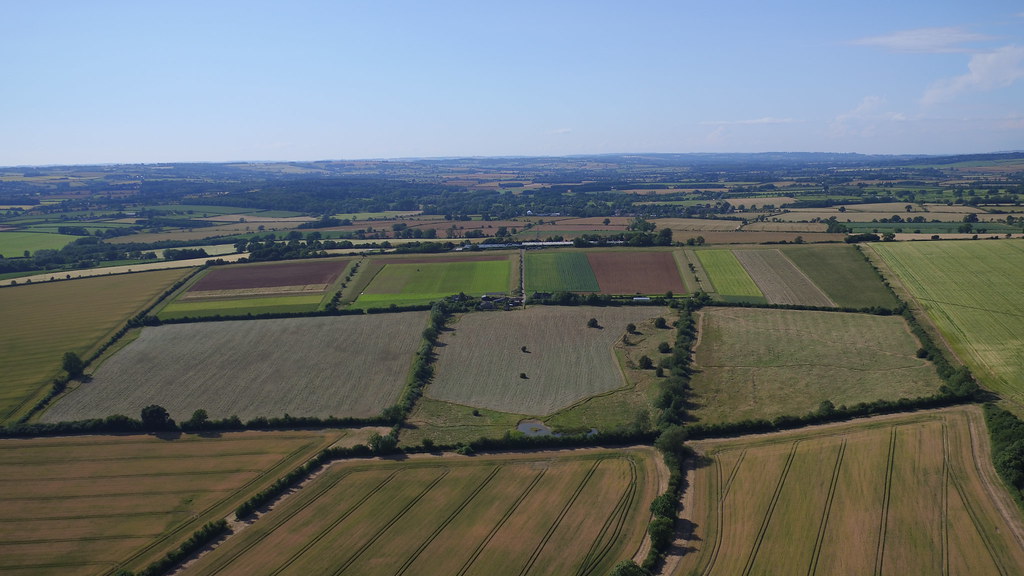
We had a busy bank holiday weekend at Honeydale. As part of our rotation, we’ve sown an enhanced wild bird seed mix, with an increased variety of species to make it more productive as a fertility builder - so we’re feeding the soil as well as the farmland birds!


In the strip next to it, we sowed herbal ley with buckwheat to act as a nurse crop in the hot weather, and to increase the phosphate levels. We’re experimenting to find the optimum sowing rate and sowed the buckwheat at a rate of 8kg/acre (20kg/ha) which is lower than last year.


The seedbed conditions were perfect with an excellent tilth. We used the Cambridge roller before and after sowing the wild birdseed mix, and the heavy flat roller after the herbal ley seed mix. The flat roller provides more consolidation but can lead to capping, so it’s a case of swings and roundabouts.

We also set up two mob-grazing sites, with electric fencing and water, for an anthelmintic experiment that’s being run on the farm by Nicola Smith from Aberystwyth University. Nicola is studying for an MA and works for the Organic Research Centre and National Sheep Association and is collecting data on herbal leys as natural wormers.


The sheep were also shorn this weekend, which has nothing at all to do with the experiment, but will help them to keep cool in the hot weather!

Guarding the Orchard

We’ve begun replacing the guards in the heritage orchard. The original guards, put in two years ago when the trees were planted, were temporary tubes which the trees have now outgrown and some of them have also been partially dislodged by the grazing sheep.

We’re replacing them all with sturdy mesh attached to two wooden posts, three inches wide, which will allow the orchard to continue to be grazed by sheep. We’ve completed the guards on 40 trees, so only another 210 to go. Those are ear defenders, by the way, not headphones!

Green Light for New Woodland at Honeydale

The Woodland Trust have just given the green light for the MOREwoods Project to proceed at Honeydale Farm, creating a new woodland covering 0.55 hectares.

The woodland will form a shelter belt around the new farm track at the north end of the farm, protecting against prevailing winds, and will comprise 1575 native shrubs and 675 trees.

The trees will include approximately 75 Crabapple trees and 400 Field Maple as well as 50 Beech trees, 50 Downy Birch, 50 Wild Cherry and 50 Bird Cherry. Shrubs to be planted include 900 Hawthorn, 300 hazel, 200 spindle, as well as 75 Blackthorn, 50 Dogwood and Dog Rose. 


The aim of the Woodland Trust’s MOREwoods Project is to give both practical and financial assistance to help create more native woodlands ‘for the benefit of people, wildlife and landscape’.

Following the completion of a bespoke site report, the Woodland Trust have helped to design the woodland and to select the most appropriate species mix.

Planting at Honeydale is scheduled to be completed by local nursery, Nicholsons, by the end of March 2018.

We are very grateful to the Woodland Trust for their invaluable assistance with this project.

Animal Farm

The animals at Honeydale haven’t quite taken over yet, but they’ve been creating havoc in the Heritage Orchard! Readers of this blog will know that we’re very keen to encourage a wide variety of wildlife to make their home at Honeydale and to introduce livestock back onto the land to improve soil fertility. But sometimes managing all the different species of animals which now live here can be a bit of a headache.


We guarded the fruit trees in the orchard from deer with tree shelters, and while doing their job effectively, the shelters created another problem. While they protected the trees from one species of wildlife,they made them vulnerable to a different one, as they proved to be popular nesting boxes for field voles. The voles have destroyed 69 of the trees in the lower area of the orchard by chewing the stems, which is precisely what we were trying to stop the deer from doing! If less than 25% of the stem is damaged the tree can survive but the ground-dwelling voles at Honeydale have been very thorough, and have chewed all the way around the stem, so sadly the trees can’t be saved. We’ve replanted the damaged trees with bare root saplings and some potted trees, putting woollen mats around them all to prevent competition from weeds until the tree roots are better established.

We tried to graze the heritage orchard with sheep to keep the grass, and therefore the voles, at bay. But the sheep were rubbing against the trees, stakes and guards and knocking them over. They also enjoyed pulling up the woollen mats, so we’ve moved them to the permanent grassland where they can now enjoy grazing around the ponds.


We’ve cut the grass all around the trees to remove the voles’ habitat and though this seems a bit harsh, unless we do this we won’t have any trees, which will ultimately support a wide variety of wildlife, including voles!

Hopefully all the animals will behave themselves for a while, and we can get on with other jobs on the farm, including ploughing.

We’re very much in favour of shallow ploughing at Honeydale, as an alternative to glyphosate and deep ploughing. Shallow ploughs are precision machines that need careful setting up so they don’t plough too deep and invert the soil, the theory being that soil biological material should remain on the surface of the soil where it can be utilised by crops. We had some teething problems with the setting up of ours, which has delayed the ploughing of the stubble turnips area, but we’ve now done this, and are waiting to plant spring wheat when the weather allows.