Showing posts with label Grazing. Show all posts

Busy Bank Holiday at Honeydale

Earlier this month we hosted a farm walk for a group of post grad students from the RAU, who came to hear about diverse and sustainable farming. They were the last visitors to use the old entrance, since the new relocated entrance, complete with dry stone wall and farm track, is now finished and waiting to welcome visitors.


Busy Bank Holiday Weekend
We had a busy bank holiday weekend at Honeydale. As part of our rotation, we’ve sown an enhanced wild bird seed mix, with an increased variety of species to make it more productive as a fertility builder - so we’re feeding the soil as well as the farmland birds!


In the strip next to it, we sowed herbal ley with buckwheat to act as a nurse crop in the hot weather, and to increase the phosphate levels. We’re experimenting to find the optimum sowing rate and sowed the buckwheat at a rate of 8kg/acre (20kg/ha) which is lower than last year.


The seedbed conditions were perfect with an excellent tilth. We used the Cambridge roller before and after sowing the wild birdseed mix, and the heavy flat roller after the herbal ley seed mix. The flat roller provides more consolidation but can lead to capping, so it’s a case of swings and roundabouts.

We also set up two mob-grazing sites, with electric fencing and water, for an anthelmintic experiment that’s being run on the farm by Nicola Smith from Aberystwyth University. Nicola is studying for an MA and works for the Organic Research Centre and National Sheep Association and is collecting data on herbal leys as natural wormers.


The sheep were also shorn this weekend, which has nothing at all to do with the experiment, but will help them to keep cool in the hot weather!

The End Of Summer

The last few weeks have been very busy ones at Honeydale. Not only have we been haymaking and harvesting but we’ve also been progressing with plans for the development of Honeydale as a Centre for Food and Farming Diversity.


Sainfoin

We’re letting our field of sainfoin go to seed with a plan to harvest it for retail. The seeds are beginning to ripen, albeit unevenly, but we are hoping it will be ready to direct combine at the end of September. It’s a special landrace selection which offers fantastic diversity, selected over many generations. Unlike bred strains with are chosen for their stability, this variety of sainfoin has been given the epigenetic freedom to adapt to its local environment.

It will be very satisfying to see the seeds harvested at Honeydale for sale through Cotswold Seeds next year.


Buckwheat

We undersowed herbal ley to buckwheat to act as a nurse crop to protect the herbal ley from hot weather while it establishes, especially important on our thin, free draining soils. It was sown seven weeks ago at 10 kilos an acre of buckwheat and as you can see from the below the herbal ley has taken wonderfully well. We’re not going to graze the sheep on it, because we’re not certain how they will take to the buckwheat, so we ran the topper over it this week to allow the light to get to the herbal ley for regrowth. We’ve also left a trial strip of buckwheat so that we can observe what happens if we don’t top it. 


Combining the Wheat

Like many farmers, there was no rest for Sam over the hot and sunny bank holiday weekend. He was busy combining the wheat. As part of our rotation it was late sown in May, undersown with trefoil and white clover for the sheep to graze in spring.

We achieved a yield of 1.4 tons an acre, which we’re very happy with, given that it was a zero input/no cost crop. The financial data is being professionally monitored by Farm Business Analyst James Turner from Strutt & Parker which will enable us to compare the new rotation with the control plots from the previous conventional, high cost/input system.

We were hoping to combine the oats too, but they weren’t quite ready.


Haymaking

Two permanent grass fields, fifteen acres each of ridge and furrow, have been cut for hay. It’s been baled and Sam has been tedding it for the past 4-5 days. Weather permitting, it might only need a couple more turns and then it will be ready to bale and feed to sheep and cattle over the winter.


Wildbird and sunflower seed mix

This was thin when it was sown in April because of the dry weather, but it’s looking a bit better now, and getting plenty of interest from our farmland birds already.


Dry-stonewalling

H and Kelvin from local dry stone walling and fencing company ‘Sticks & Stones’ have been carrying on with the building of the wall at the entrance of Honeydale and it’s progressing slowly but steadily. It’s highly skilled and painstaking work and we could of course have just erected a fence here. But limestone walls are so quintessentially Cotswold and there was a wall at the entrance of Honeydale which had fallen down, so we wanted to rebuild it reusing the old stone.


Development of Honeydale

We’ve been working closely with architects and West Oxfordshire District Council to progress the plans for the development of Honeydale. We’re currently at pre-application stage and Tim and Chris, our architects, are now drawing up visualisations, taking great care that replacement farm buildings will be perfectly in-keeping with the landscape of the Cotswold Area of Outstanding Natural Beauty. 


Exciting times.

Spring Planting Farming Update

As part of our eight year rotation we sow certain areas of the farm each year with cash crops or fertility building leys.

Following our experiment last year with sowing fertility building leys together with a nurse crop of buckwheat, we’ve taken the same approach again. Buckwheat acts as a quick growing and leafy cover and while the ley establishes beneath it, the buckwheat helps to retain moisture and offers shelter from the summer sun. This is important on our south facing, free draining, dry soils. However, we’ve reduced the buckwheat to 10 kilos per acre this year as it was a bit too thick last year at 20 kilos per acre. The buckwheat was drilled to 1.5 cm and in a separate pass, the ley mix was broadcast and harrowed with a consolidating flat roller to finish.


We also established cash crops. Spring wheat was sown at the end of April, undersown with yellow trefoil and white clover to improve fertility and provide grazing once the crop is combined in the autumn. It’s going to be interesting to see whether this has established after slow stunted growth due to lack of rain.


The other cash crop we’ve grown is spring oats. We originally experimented with direct drilling into last year’s yellow trefoil and white clover that was left in place over the winter. The yellow trefoil and white clover was grazed tightly and oats direct drilled with the Aitchison drill at a rate of 250 kilos per hectare in mid April. But the lack of rain has caused havoc. With a year‘s growth under its belt the deep rooting and drought tolerant yellow trefoil and white clover grew back far more strongly than anticipated and swamped out the oats. So several weeks later, and with only a handful of gallant oat plants soldiering on, the decision was taken to plough the field and resow from scratch. The oats are now looking great.


Ryegrass and vetch was sown last autumn, direct drilled into last year’s oats stubble. It provided useful early grazing this spring for sheep. It was ploughed in March and a field scale bird food mixture was established. The dry weather has again taken its toll and the crop is thin. Weeds are present and we are going to decide if we leave the crop in or sow again. Much depends on how much rain is in the forecast.

As part of our ongoing experimentation, we have left four acres of spring barley unchanged since we took over the farm, providing two continuous control plots that let us compare the effect that the new rotational system, with its associated soil improving species and no artificial inputs has on soil health, compared to a high input continuous cereal system.


This is also the first year that we’ll be able to look at the relative costs between the 8 year rotation and the high input, conventionally grown spring barley, which has received standard treatments of fungicides, herbicides and nitrogen.

The wildflower margins are in their third year, running in 12 metre strips around each field. We are seeing a noticeable change in the balance of species present, from early pioneer species in the first couple of years, such as oxeye daisy and wild carrot, to the species that have taken longer to establish, like field scabious, musk mallow and meadow buttercup. They are creating a great habitat for pollinators, insects, hares and ground nesting bird species.


Great sainfoin regrowth 3 weeks after cutting, with very little rain

Introducing Molly the Collie

Since we’re using the mob-grazing system at Honeydale, Ian, Macca and Sam have been moving the sheep on a daily basis since the beginning of March, but now the sheep have grazed down the crop of ryegrass and vetch from the top to the bottom, they needed to be moved onto the field of stubble turnips to clear up the regrowth before being moved to permanent pasture. This meant directing the whole flock through the narrow farmyard and out the other side, so owner of the sheep Ed Adams, who farms across the valley, brought his trusty sheepdog Molly to help out. Four-year-old Molly is used to shepherding large numbers of sheep on the Adams’ farm and the work at Honeydale proved a breeze for her. It was wonderful to watch her in action. One clever dog achieving in ten minutes what it would take several grown men four times as long to manage!

Digging The Dirt on Honeydale Farm

Digging the Dirt is a Soil Association series of in-depth reports on farmers who are reaping the benefits of investing in their soil. (by Tim Bevan)

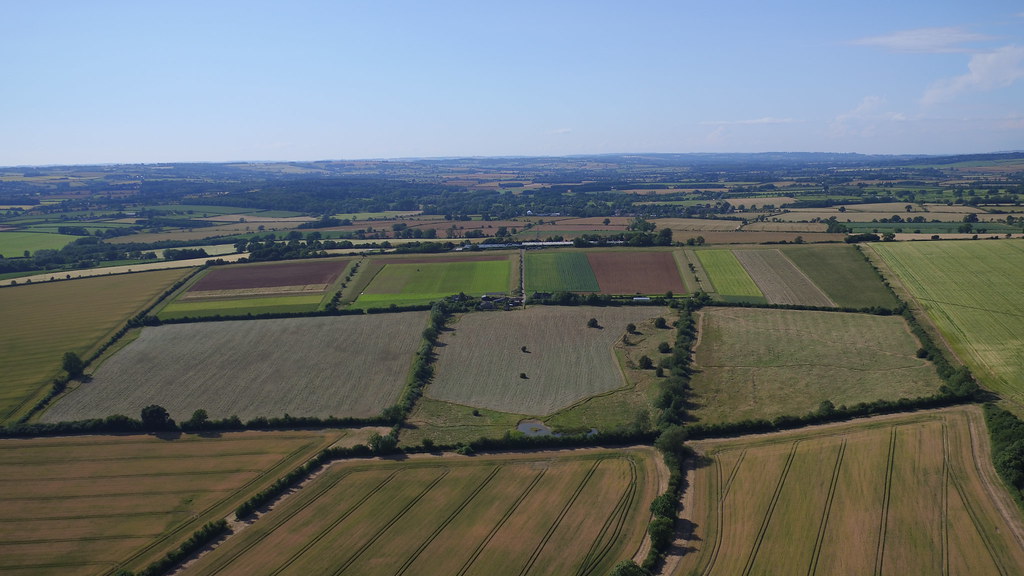
Cotswold Seeds purchased the 107 acre Honeydale Farm back in 2013. Managing Director, Ian Wilkinson, wants to demonstrate how small family farms can use sustainable farming practices whilst maintaining a respectable income. The single most important factor in achieving this goal is improving and maintaining soil quality of their Cotswold brash soils.

Setting a baseline
For the first year, Ian ran the farm exactly as it had been run by the previous owner. With half the farm down to arable and half as ridge and furrow permanent pasture. Ian drilled 60 acres of spring barley. All operations were carried out by contractors and produced a good quality crop, which received a malting premium. This looked promising until the sums came in. The total cost for crop establishment, fertilisers and sprays came to £11,000 which was £60 more than the crop returned.The crop was only in the ground for 12 weeks, so for much of the year there was little soil cover leaving it exposed to runoff. So on consideration the existing system did not meet any of the farm’s ambitions. Historically, the farm had been profitable but this was due to lower costs, good grain sales and support payments; both stewardship and area payments. The permanent pasture produced some income from hay sales, grazing lets and a stewardship payment.

Carrying on with this simple system was not an option; motivation to change came from a desire to put in place a truly sustainable farming system which would:

1. Produce high quality food

2. Increase farm diversity

3. Improve economic performance

Diversity for resilience
Diversity of farm structure is important to improve the farm business performance by having a range of produce for sale and to reduce exposure to limited markets. Direct farm payments are still important to the farm income, but the intended changes to the previous simple system will create new income streams and so support payments will not be relied on in the future. The farm is to be made as diverse as possible with a ‘patchwork quilt of cropping’ – to quote Ian.

The 5 stages of Honeydale’s 8 year rotation
The rotation will not be rigid as some degree of flexibility is essential for changing circumstance and un-expected weather conditions. This flexibility is provided by the farm owning much of its own machinery and equipment – this was made possible by purchasing second hand, smaller machinery to keep down costs with the exception being one modern tractor. Ian’s planned rotation is:

1. Mob grazing & herbal ley for soil improvement

The soil improvements have started by putting in place an 8 year rotation at Honeydale with a 4 year deep rooting herbal ley (a standard Cotswold seed mix) at its heart. This ley, once established, is managed by a sheep flock in a mob grazing system. The livestock are fundamental to the system, transferring fertility from their manure and urine to the soil. The sheep are not owned by Honeydale Farm, in fact there is no intention to own livestock, as this will be too much of a time commitment as well as an unwanted capital purchase. The only input from the farm staff is watering and moving to fresh grazing.

2. Shallow ploughing to protect soil biodiversity

At the end of its 4 years, the ley is ploughed under, typically at the end of July. A crop of stubble turnips and forage rape are sown to be grazed by ewes with lambs at foot. This forage crop allows for effective destruction of the ley. Although ploughing is known to have a negative effect on soil health, the options to kill off a well-established sward are limited. To reduce the soil damage the farm has invested in a new very shallow plough; an ‘Ovlac’ from Spain, a 6 furrow reversible with which it is possible to plough at only 3-4 inches. This forage crop is grazed by sheep and this typically lasts into January. The remaining grazed stubble is ploughed under with the shallow plough and sown with spring wheat, at a standard seed rate.

3. Undersowing & direct drilling for weed suppression
Although not managed organically, Ian wants to eliminate pesticide use, so to help with weed control, the wheat is under-sown with a mix of white clover and yellow trefoil. This is sown on the same day as the wheat with the farm’s own Aitchson seed drill; a typical coulter type drill The drill places the clover/trefoil seed between the drills of the wheat seed. The clover and trefoil mix is not just for weed suppression but also for soil health – as much soil is covered with a plant as possible throughout the year. Bare soil is frowned upon at Honeydale, as there is now considerable evidence that for a soil to function at its best it needs to interact with a living plant root as well as to be fed with good quality organic matter.

Both the white clover and yellow trefoil do not compete with the wheat crop, and once the wheat is harvested there is a crop ‘ready to go’ for grazing the sheep. Incidentally, there is long history of using yellow trefoil in the UK, particularly with spring barley where the two crops were grown together in a continuous rotation.

Although the clover and trefoil is available for autumn grazing it is kept back for early spring grazing by the sheep.

If grazed hard by the sheep in the spring, the farm will experiment with sowing a spring oat crop directly into the clover and trefoil stubble, with a March or April sowing date. If this is not possible, the stubble will be shallow ploughed and the oats under-sown with vetch. The oats are cut in August, with the under-sown crop of either clover/trefoil or vetch going on as a winter cover crop, which is available for spring grazing.

4. Seed mix for wildlife and soil improvement
A wild bird seed mix is slotted into the rotation next, with an emphasis on late spring mechanical weed control to prevent problem weeds getting into the rotation. The mix is a field scale wild bird seed mix, sown annually in the early summer. It is shallow drilled and rolled and left down for a year, then moved to a different field. The aim is to provide food for the birds and also to act as a green manure and soil improver.

5. Nurse cropping for re-establishing grass ley
To complete the rotation, the diverse grass ley is re-established. Honeydale is experimenting with methods to do this and to suppress weeds; typically the ley would be under-sown beneath a spring cereal crop, but this year Honeydale used buckwheat, sown at 18kgs per acre as a nurse crop to protect the under-sown ley from summer heat and sun and to give good soil cover. The frost in November killed the buckwheat and left the new ley.

The bottom line
At the start it was clear the old regime wasn’t working financially, so how will the new model change this?

New crops
Adding value to crops will help, but is proving challenging so far. Ian has looked at ways to turn 5 tonnes of oats into a product he can sell directly for making porridge; this has been more difficult than he first thought. Big processing facilities do not want small quantities and the cost and equipment to process what is a small tonnage of oats is so far preventing this project from progressing.

15 acres of the farm has been planted as fruit orchard, helped by a local nurseryman and the local community, with mostly apple, pear and cherry trees in single varieties. They are planted at a traditional spacing of 30 foot, to allow for sheep grazing between the trees. This increases productivity by having two crops from the same plot of land, as well as the sheep being able to return fertility to the orchard soils. Ways of adding value to the fruit will be considered, such as bottling the fruit for direct sales.

A rural community hub
Ian considers the farm buildings important in his ambitions to improve earned income. He has plans to make this a centre for the wider rural community by providing a processing centre to add value to farm produce – in fact he would like to see it as a complete centre for the processing, distribution and sales of local farm produce. The general and local public are already interested in what the farm is doing turning up in high numbers to farm open days.

Flood management & planting trees
Soil health and water quality go hand in hand, but a natural flood management scheme at Honeydale has used innovative techniques to help reduce flooding from rapid storm run-off in the local village of Ascott-under-Wychwood. There is spring line on the farm, which feeds the Evenlode River via two main streams. The river rises and falls very quickly.In 2010 it flooded 60 homes in Ascott-under-Wychwood. All the land at Honeydale is on a slope and the streams had been straightened so water run off to the river was too efficient.

A new system was devised with the help of an aquatic consultant. The straightened stream was put back into its original sinuous bed still visible on the landscape and the water flow was held up further by the use of three ‘leaky’ dams. These are stone faced earth wall bunds with a leaky or permeable top, constructed from large stones, which are covered with turf to hide the landscape work. The water is then fed into a large scrape and wetland before reaching the Evenlode. This wetland area is planted up in a dense pattern with a mixture of hazels, willows and dogwoods to encourage water infiltration deep down into the soil. The net result is a flattening out of the peak water flow.

This scheme was supported by the Cotswold Rivers Trust and the Big Lottery Fund ‘Awards for All’ for capital works and tree planting. Not surprisingly, this scheme has attracted great interest from water companies and politicians.

Honey and pollination
To encourage diversity, the farm has recently installed seven beehives, with help and advice from Cotswold Bees. Not only will they provide income from honey sales, but they will also help pollinate seed crops and fruit trees. The first honey is from bees collecting nectar from a crop of Sainfoin; a long term crop used on the farm, which is down for 7-8 years and is very important as a soil improver.

Measurement and results
An experimental area on the farm has been invested in with monitoring equipment by North Wyke, Reading University and the Duchy College. The research focuses on the deep rooting mixtures important to the farm’s underlying philosophy, with interests in forage quality, nitrogen losses, and total emissions.

It’s still early days for the soil improvement measures so soil analyses are still base line references; soil organic matter measured by Loss on Ignition is at 4% sampled from soils in winter stubbles, potash levels are at a respectable 2 and phosphate levels quite high at 3 - certainly for the Cotswold brash soil type. As a control measure to compare against his present system, Ian has kept a total of 5 acres under the original ‘spring barley only’ system.

There are no additions from outside the farm system, either of purchased manures or composts – the manure from grazing sheep is the only, but very valuable input.

Early indicators
The advantages of the changes are already becoming evident – there is less sign of the soil erosion that used to build up in the farmyard and run down the drive. The grazing of the grass leys is effective in controlling troublesome weeds such as perennial sow thistle, which is grazed off before it gets chance to seed.

Permanent pasture is highly valued on the farm for its multiple benefits, so these have been preserved from the original farming system. They provide grazing in the shoulder months, a valuable hay crop and also native wild flowers, which are becoming rare in the countryside with the knock-on loss of their supporting role for our native insect pollinators.

The farm strives to be an example of how to produce food, care for wildlife, manage natural capital, maintain the landscape and protect human welfare; here, there are multiple outcomes from the same parcel of land. To quote Ian he hopes it to be ‘a new version of the mixed farm’.

Intercropping Oats

It was a wet but busy weekend at Honeydale. Last year we under sowed wheat with a yellow trefoil and white clover winter cover crop, and this year we’ve direct drilled spring oats into the yellow trefoil and white clover. We’re now been topping it with mob-grazed sheep which works on two levels, saving us from having to roll it and also adding fertility to the land through the sheep’s dung. It’s the first time these fields have had livestock on them for decades so we’re looking forward to seeing an improvement.


Mob Grazing Update


In another experiment at the farm, Sam ‘Macca’ McPherson from the Cotswold Seeds’ warehouse was keen to broaden his experience at the farm. He owns a small flock of rare Texels sheep and his father is a stockman at the Sezincote Estate, so he’s putting this background to good use. Here Ian and Macca chat about the mob grazing system at Honeydale Farm, which is just coming to the end of its first 'cycle' on the Cotswold Seeds Herbal Ley.

Testing the Water, Mob Grazing, Ploughing and Scattering

Testing the Water

Following our participation in last year’s Thames Water Blitz, organised by Wild Oxfordshire and Earthwatch, we again tested the water at Honeydale.

The tests determine levels of nitrate and phosphate and a range of samples were taken across the ponds, dams, stream and spring that comprise the new flood alleviation waterworks on the farm.


The nitrogen levels were high and the phosphate low, which is what is to be expected based on last year’s results. But we are fixing our own nitrogen with sainfoin, green manures and grass leys so will be monitoring levels closely now and we are confident that our new farming system will not be adding to the problem, and is a method that should, over time, help to reduce water soluble nitrogen in rivers.

Mob-Grazing Moving On

Now the electric fencing is all in place, we are moving the sheep, thirty ewes and sixty lambs, every day. It’s only taking about twenty minutes a time. After two weeks the sheep now know what to do, and and as soon as the fence moves and they can see their way open to lush ungrazed herbal ley, they walk on through, follow each other just like...sheep!

Mob grazing moving on
One maintenance job we have to complete every two weeks is mowing under the fences with the Allen Scythe to make sure the grass does not grow too tall to touch the wire and earth it.

We’re also addressing the issue of bringing drinking water to the different areas as the sheep are moved. We’ve installed a bowser with a 1000 litre capacity which is pumped full from the spring and we are awaiting delivery of plastic tubing which will be run in a loop around the field with branch lines into each area. All we’ll have to do then is move the small empty trough each day, and in the future when different fields are given over to pasture in the rotation, we can simply move the water pipe to the new areas. 

The Sheep have been enjoying grazing the Sheep’s Parsley in the Herbal Ley

We plough the fields and scatter….

Our arable fields were planted with Summer Quick Fix green manure which we over-wintered and ploughed a couple of weeks ago and have now power harrowed, rolled and planted with cereals; spring wheat, spring oats and spring barley. After sowing the spring wheat we’ve sown our standard mix of yellow trefoil and white clover under it as an intercrop. This will act as a soil improver and to be grazed after the wheat has been harvested.

Ploughing in Summer Quick Fix Green Manure in Arable Field Summer
Sam drilling spring barley next to sainfoin
Ring rolling after power harrow before drilling
Rolling intercrop with flat roller
Watering sheep
Rye/Vetch - Sown last Autumn
Allen Sythe


Managing a Ley with Electric Fencing and Mob Grazing

We have now planned out a new crop rotation on our arable land, dividing the area into an eight year rotation.

For the first four of these years, the land will be given over to leys, so our first job this spring with the ley (a fertility building herbal ley) has been to fence the eight acre field for mob (cell) grazing.

The benefits of mob grazing are that it prevents livestock repeatedly seeking a favourite spot and severely trampling the soil as well as concentrating manure, to get high levels of manure returned to the soil across the field.


We also find that when grazing diverse swards, if allowed to choose, livestock will continually preferentially graze the most delicate, tasty species. If these species are not allowed a break to regrow, they may be grazed out of the sward, lowering the overall diversity. This is the opposite intention for our diverse fertility building ley.

We’ve chosen electric fencing which is a cheaper, more effective, and very versatile way of containing livestock in any shape or size area. It is designed as a psychological barrier which sheep and cattle fear to cross, rather than a purely physical one. Portable electric fencing gear also allows for subdivision of pastures, mimicking wild migration patterns where predators keep herds bunched together and migrating as a group. 


We are using a semi permanent outside fence with portable electric fencing to make strips inside for maximum flexibility. The benefit of using a portable electric fence inside a permanent electric fence grid is that the portable wires allow you to change the size of the paddocks over the course of the grazing season as the grass growth speeds up, slows down, or becomes dormant.

Considerations when planning an electric fencing grid include taking into account the variation in conductivity in different portable wire products. In order to contain cattle you need to maintain at least 2,000 volts on the fence, but because of their wool insulation, sheep need 2,500 volts to be deterred from crossing. Since most polywire and polytape fall below 1,000 volts in less than 500 yards, steel wire is the best option, capable of carrying current much farther, with only a 2,000 to 2,500 volt drop per 1,000 yards of fence line.

It’s also important to make sure that plants are not touching the wire, otherwise the electricity will go to earth rather than to the animal, so we used our flail mower to mow a strip a couple of metres wide prior to staking.


We underestimated the time it took to fence the 800m perimeter of the field and divide it into four strips, one for each year. It ended up being a two man job lasting a whole day. We also had a hitch with the energizer. I’d not used one before and given it was a solar powered fence, I didn’t realise that it also needed a battery for the solar energy to charge.

However once we’d sorted that out, it was hugely satisfying to bring thirty ewes and sixty lambs from Nigel and Ed Adam’s farm and watch them emerge from the livestock trailer and begin grazing the lush ley. We shall be moving them onto different areas each day so watch this space for progress updates.

The Not-So-Bleak Midwinter at Honeydale

Dr Richard Broughton from the Centre for Ecology and Hydrology has been on one of his regular visits to update the bird survey. He confirmed that all the food we’ve planted from bird food mixes has been eaten. We are now entering the ‘Hungry Gap’ so we are supplementary feeding with surplus seeds left over from last year, including wheat, rape, canary seed, millet, sunflower, oats, barley and mustard.


The mild weather has resulted in an unusual amount of grass growth which has been kept under control thanks to two hundred sheep from the Adams’ family farm which came to us for a month to graze on the Honeydale hay meadow before moving on to pastures new. However we are pleased to welcome them back to graze the 35 acre Plum Tree field.

On the subject of fruit trees, Dave and Macca from the Cotswold Seeds warehouse have been guarding the final trees in the Heritage Orchard against deer, using 1.2 metre high tubes. Trees that have wider spreading growth have been guarded with mesh.

Good news for the sunnier months. We will be doubling our quantities of bee hives, when we welcome half a dozen hives from Cotswold Bees. We’re very proud that our original hives have been performing so well that Chris Wells, the regions’ top bee expert, wants to bring some of his bees to join us.


October Update

Thames Organic Growers

We were delighted to welcome this group of vegetable growers who are interested in making soils more fertile and productive by using green manures. They came for a morning walk and talk, presented by Sam and Ian. We had a look at existing crops as well as what has been newly sown, and happily, the sun shone.


Sheep Grazing

Since the beginning of October, we’ve had sheep mob grazing on our spring-established herbal ley and spring-sown Sainfoin, at the rate of 100 sheep per acre, per week, back fencing each strip as we go. The idea is to graze down the fields so they’re not winter proud and leafy. The sheep certainly look like they are enjoying it and will be on the leys until early November. 


Sainfoin being grazed - note electric fence

Natural Flood Management & Other News

Natural Flood Management


Last winter we created a natural flood management feature to hold up water flow at peak times from the spring and reduce the input into the River Evenlode. The feature also created a more diverse wetland habitat at Honeydale and provides a small scale, working example of how this type of flood management can be implemented on wider catchments in the UK. The Cotswold Rivers Trust under the guidance of waterways management specialist Vaughan Lewis, returned to Honeydale a few weeks ago to carry out some improvements, having observed how it’s performed so far. They dug deeper into the bottom pond to increased it’s capacity and have introduced aquatic plants, including iris and sedge, to improve habitats. We look forward to seeing how the water course reacts this winter when the flow is higher.


Other News


We’ve bought a set of cultivation disks so that we can experiment with shallow soil cultivation techniques and weed control. The idea is to look at how traditional cultivation techniques can be utilised to remove weeds, with a lower reliance on chemical methods of weed control. So far we have noted that to get a reasonably weed free seedbed, the ground must be disced two to three times before sowing, set at a shallow depth to cut weed roots without moving excess soil and bringing up more weed seeds.

The ewes and lambs were sheared just before the weather warmed up and are grazing well on our permanent grassland.


We are planning to establish an orchard in November in the twelve acre grass field, with three hundred mixed fruit trees and an ‘orchard within an orchard’ of denser, shorter trees for children. The aim is that the orchard can be used for education at all ages, from schoolchildren to students studying orchard maintenance.