Soon Bee Spring

We’ve been feeding the Honeydale bees on sugar fondant over winter. The sugar water we use over the summer promotes the wrong activity in the Queen, leading her to think there are plentiful nectar sources available, whereas sugar fondant closely resembles the honey the bees would rely on during the colder months. Ours started to feed on it after Christmas and with a few warm, sunny days lately, with temperatures rising to over 10 degrees, they’ve started to emerge from their hive. It’s encouraging to see they’ve survived their first winter at Honeydale and since there’s not much pollen or nectar around for them yet, despite the sunshine, we will be continuing with the fondant paste for the next few weeks, and will carry out our first hive inspection at the end of March, after which we’ll be checking on them once every 7-10 days.


Honeydale From The Air!

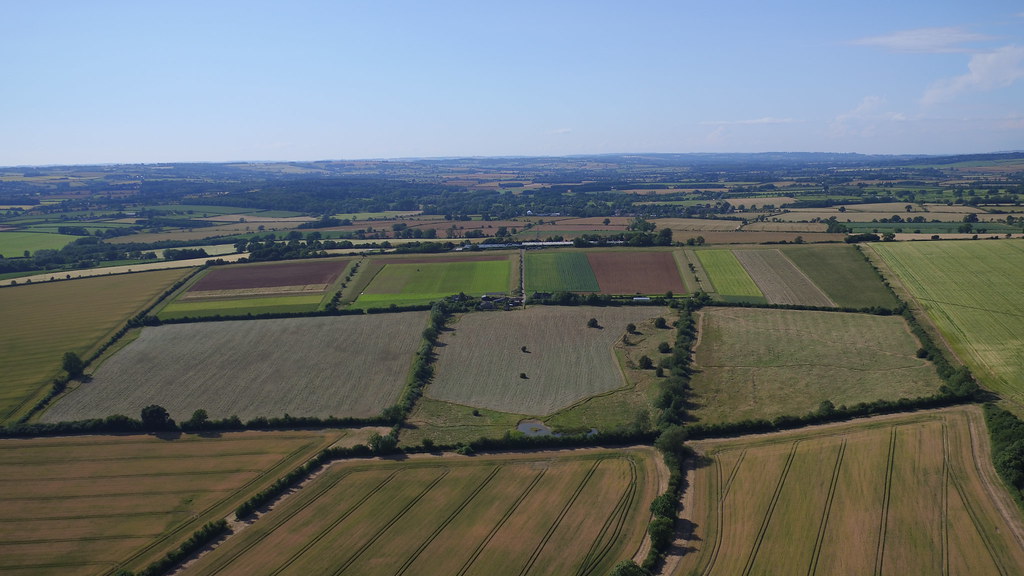
Is it a bird? Is it a plane? No, it’s a drone, which flew up and over Honeydale Farm last week with a camera attached. From an altitude of 500ft it captured some wonderful photography of the wintry fields and spectacularly displays the flood alleviation works, showing how the recent rainy weeks have resulted in water flowing down through the leaky dams to the holding pool at the bottom of the fields.


The darker brown strips in the four top fields are control plots of barley that we are reseeding every year to test the soil in order to monitor how we are improving it with various mixtures of green manures, cover crops and herbal leys on our other fields. It’s also great to see the newly planted Heritage Orchard (the white dots to the right of the photo) from this perspective. Our beehives are also visible to the right of the farm buildings. We hope to be able to send the drone up again over the coming months to show how the farm changes over the seasons.


The Not-So-Bleak Midwinter at Honeydale

Dr Richard Broughton from the Centre for Ecology and Hydrology has been on one of his regular visits to update the bird survey. He confirmed that all the food we’ve planted from bird food mixes has been eaten. We are now entering the ‘Hungry Gap’ so we are supplementary feeding with surplus seeds left over from last year, including wheat, rape, canary seed, millet, sunflower, oats, barley and mustard.


The mild weather has resulted in an unusual amount of grass growth which has been kept under control thanks to two hundred sheep from the Adams’ family farm which came to us for a month to graze on the Honeydale hay meadow before moving on to pastures new. However we are pleased to welcome them back to graze the 35 acre Plum Tree field.

On the subject of fruit trees, Dave and Macca from the Cotswold Seeds warehouse have been guarding the final trees in the Heritage Orchard against deer, using 1.2 metre high tubes. Trees that have wider spreading growth have been guarded with mesh.

Good news for the sunnier months. We will be doubling our quantities of bee hives, when we welcome half a dozen hives from Cotswold Bees. We’re very proud that our original hives have been performing so well that Chris Wells, the regions’ top bee expert, wants to bring some of his bees to join us.


Herbal Leys on the Radio!


Listen out for Ian Wilkinson speaking on BBC Radio 4’s Farming Today next week. In advance of the ORC in Bristol on Wednesday, Presenter Beatrice Fenton visited our office and warehouse to learn about the benefits of herbal leys in terms of soil fertility, animal health and profitability and sustainability. She watched some of our seeds being put through the mixer and then we went with her on a field trip to Honeydale Farm to see a herbal ley in situ. The sunny, frosty morning would have been perfect for filming but hopefully the words will paint the same perfect picture!

Honeydale Heritage Orchard


We’re creating what we believe will be a unique heritage orchard at Honeydale, complete with all the old Oxfordshire varieties of fruit trees as well as varieties and including some rare and unusual apple varieties.


The Honeydale Heritage Orchard was planted with the help of the Wychwood Project, the staff at Cotswold Seeds and friends of the farm. Varieties were planted a standard 30ft apart with an orchard within an orchard at its heart. This is an enclosed and protected space created with trees grafted onto smaller rootstocks, which we plan to use for education as an outdoor classroom.

We have always wanted to create an orchard and when we met with Andy Howard from the Heritage Fruit Tree Company near Banbury a couple of years ago our dream came into fruition - quite literally! Andy has spent the last two years hand-grafting dozens of regional species so that we had 250 trees to plant. These include 144 apples, 35 cherries, plus apricot, damson, gage, mulberry, nectarine, peach, pear, plum, quince and nectarine.

The varieties include the historic Old Fred, Red Army and Blenheim Orange found at Woodstock, Oxfordshire in about 1740, the original kernel planted by tailor George Kempster. We also have the Belle de Boskoop which originated in the Netherlands, as a chance seedling in 1856 and the more recent Deddington Pippin, propagated by Andy Howard in 2000 and featured on BBC 4’s recent ‘Apples’ programme.

‘This is a major initiative since many of the rare varieties are no longer grown commercially,’ says Andy Howard. ‘The Honeydale Heritage Orchard will help to ensure their survival.’

The orchard has been planned to provide edible fruit all year as well as attract wildlife, adding to the rich diversity we plan for the farm, with a range of agricultural and horticultural projects to provide a unique blend of products and interests.


We are missing just two varieties for our orchard - the Oxfordshire Greening and Corrie Washer - which Andy is tracking down for us and hopes to be able to plant next year.

Lots of Linnets

Dr Richard Broughton from the Centre for Ecology and Hydrology, had a great visit to the farm this month when he came to update the bird survey. The size and diversity of our bird food plots is really paying off.


He recorded approx 300 Linnets, 100+ Yellowhammers, 35 Goldfinches, 60 Greenfinches, 140 Fieldfares (on the hedgerow berries), about 30 Song Thrushes, and SIX new bird species! These were Stonechat, Brambling, Grey Wagtail, Mistle Thrush, Golden Plover (a fly-over flock) and a young Cormorant checking out the ponds from the air. That takes the bird list to 67 species. Richard also added a new mammal - Grey Squirrel - although this was close to the owl box and might have moved in.

Cotswold Rivers Trust Demo Day

Last year, with the help of the Cotswold Rivers Trust, we created a natural flood management feature at Honeydale Farm to hold up water flow at peak times and reduce the input into the River Evenlode, as well as creating a more diverse wetland habitat. Since the project at Honeydale provides a small scale, working example of how this type of flood management can be implemented on wider catchments in the UK, we were delighted to welcome representatives from various water and river authorities, councils, and bodies including the Environment Agency, as well local people and flood action groups, to discuss what we had done and it’s wider implications.


The day's events, which began at the Beaconsfield Hall in Shipton Under-Wychwood, were introduced by Trevor Cramphorn, Chairman of Cotswold Rivers Trust, before Ian Wilkinson and Sam Lane talked about the water management works that have been undertaken at Honeydale Farm. This was followed by presentations from waterways management specialist Vaughan Lewis, Dave Gasca, Hydrologist from the Evenlode Catchment Partnership and, Alistair Yeomans, Chartered Forester from the Sylva Foundation who spoke on the topic of Woodlands for Water. The day ended, after lunch and a Q&A session, with a site visit and tour of the works at Honeydale Farm.


October Update

Thames Organic Growers

We were delighted to welcome this group of vegetable growers who are interested in making soils more fertile and productive by using green manures. They came for a morning walk and talk, presented by Sam and Ian. We had a look at existing crops as well as what has been newly sown, and happily, the sun shone.


Sheep Grazing

Since the beginning of October, we’ve had sheep mob grazing on our spring-established herbal ley and spring-sown Sainfoin, at the rate of 100 sheep per acre, per week, back fencing each strip as we go. The idea is to graze down the fields so they’re not winter proud and leafy. The sheep certainly look like they are enjoying it and will be on the leys until early November. 


Sainfoin being grazed - note electric fence

Combined Effort & A Quick Fix

The combine harvester we bought earlier in the year had its first outing last week, when we brought in the spring barley.

The sun was shining, all was running sweetly and we filled our first tank with grain. But then we could unload no more, due to a problem with the unloading auger.


Anyone who’s tried to repair a combine will know how difficult it is just to get access to anything. We were soon covered in prickly ears of barley and baking in the hot sun, listening to the taunting hum of fully-functioning combines busy at work on the neighbouring farms.

After several hours we had to admit defeat and called in the local engineer from Cotswold Combines. He visited the following morning, diagnosed a broken bearing in the unloading auger, and had it up and running within a couple of hours. The only trouble was the rain, which forced us to postpone harvesting the rest of the barley.

A week later we were able to finish the job, with a good yield of 1.8 tons per acre with 15% moisture content. We’ve sold the barley to a local farmer for feed and we shall be baling the barley straw, probably for bedding and feeding to sheep.

Our main reason for growing spring barley though, it that it’s traditionally been grown at Honeydale and though we’ve diversified with various other crops and mixtures, we wanted to retain a small acreage of the original crop to benchmark ‘before and after’ soil conditions.

On the subject of quick fixes,we’ve been experimenting with a method of soil improvement in the form of over winter green manure which we believe has been used little in the UK in recent times. We sowed our Summer Quick Fix, comprising mustard and legumes, in one of the fields and it’s grown well, smothering weeds and creating double the density of a trial brassica mix of radish and mustard. We’ve now purchased a crimper/roller with blades and will use it to flatten and cut some of the green manures before drilling with rye and vetch to protect the soil over winter..

Honeydale Video Blog Part 3 - Beekeping Part 3


The third instalment of our Honeydale Farm video blog shows our bees arriving at the farm! Paul talks us through the details of transferring the bees from where they were originally brought along to the farm, and making sure they go into the hives without any problems and settle in as they should.

Hope you enjoy!