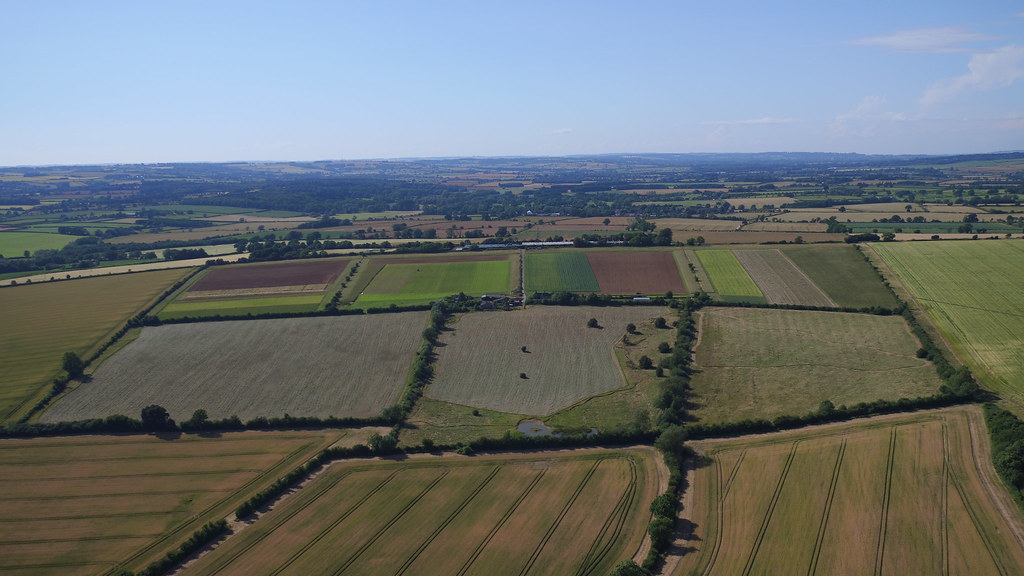
US Technology in the Cotswolds


The No Till Crimper Roller is standard farm machinery in arable America but as far as we are aware our experiment at Honeydale Farm this weekend is among the first times that one has been used in the UK.


As the name implies, the Crimper Roller offers a way of terminating cover crops with no till; by avoiding the need for spraying, mowing and ploughing, it’s a much cheaper and faster method. It relies on having a bulky cover crop which is then crushed, the flattened plants forming a mulch on top of the soil which keeps weeds at bay and also allows new seeds to come through. Ingenious!

This weekend marked our first attempt at controlling our winter cover crop of rye and vetch. The trick is to find the ‘Goldilocks Moment’ when the plants are just right to terminate, in other words when they are old enough to remain flat once rolled, but not too old to seed. 

We have rolled one trial strip in our cover crop to start with but as we suspected, we were a little too early and some of the plants may recover. We will be repeating the process weekly until we have determined the correct stage to terminate, so tune in next Monday to find out what happens!

Testing the Water, Mob Grazing, Ploughing and Scattering

Testing the Water

Following our participation in last year’s Thames Water Blitz, organised by Wild Oxfordshire and Earthwatch, we again tested the water at Honeydale.

The tests determine levels of nitrate and phosphate and a range of samples were taken across the ponds, dams, stream and spring that comprise the new flood alleviation waterworks on the farm.


The nitrogen levels were high and the phosphate low, which is what is to be expected based on last year’s results. But we are fixing our own nitrogen with sainfoin, green manures and grass leys so will be monitoring levels closely now and we are confident that our new farming system will not be adding to the problem, and is a method that should, over time, help to reduce water soluble nitrogen in rivers.

Mob-Grazing Moving On

Now the electric fencing is all in place, we are moving the sheep, thirty ewes and sixty lambs, every day. It’s only taking about twenty minutes a time. After two weeks the sheep now know what to do, and and as soon as the fence moves and they can see their way open to lush ungrazed herbal ley, they walk on through, follow each other just like...sheep!

Mob grazing moving on
One maintenance job we have to complete every two weeks is mowing under the fences with the Allen Scythe to make sure the grass does not grow too tall to touch the wire and earth it.

We’re also addressing the issue of bringing drinking water to the different areas as the sheep are moved. We’ve installed a bowser with a 1000 litre capacity which is pumped full from the spring and we are awaiting delivery of plastic tubing which will be run in a loop around the field with branch lines into each area. All we’ll have to do then is move the small empty trough each day, and in the future when different fields are given over to pasture in the rotation, we can simply move the water pipe to the new areas. 

The Sheep have been enjoying grazing the Sheep’s Parsley in the Herbal Ley

We plough the fields and scatter….

Our arable fields were planted with Summer Quick Fix green manure which we over-wintered and ploughed a couple of weeks ago and have now power harrowed, rolled and planted with cereals; spring wheat, spring oats and spring barley. After sowing the spring wheat we’ve sown our standard mix of yellow trefoil and white clover under it as an intercrop. This will act as a soil improver and to be grazed after the wheat has been harvested.

Ploughing in Summer Quick Fix Green Manure in Arable Field Summer
Sam drilling spring barley next to sainfoin
Ring rolling after power harrow before drilling
Rolling intercrop with flat roller
Watering sheep
Rye/Vetch - Sown last Autumn
Allen Sythe


Flood Alleviation Video

We took the drone to the farm to show off the Honeydale flood alleviation works from a different angle

Bees Bee-Hiving Badly


Like many of us, the bees in the Honeydale hives appear to be extremely confused by the weird weather we’ve been seeing lately. One minute it’s warm and sunny and ideal for foraging and the next it’s freezing cold with rain, sleet and snow, weather that tells them to stay inside the hive. To confuse matters further, the recent mild winter has meant that the bees probably didn’t use up as much of their reserves as they usually do over the cold months. With rape seeds in flower now, the bees have been out and about, busy gathering nectar. As a result, one of the hives has filled up so quickly with brood, larvae and honey that we’ve already had to add another super (What's a super? go to 4:05 here), long before we’d normally expect to have to do this.


But the behaviour of the bees is as topsy-turvy as the weather. While one hive is full, the second is pretty empty and the bees are trying to swarm by creating lots of new drones and queens in queen cups. Swarming is a natural process that occurs at certain times throughout the year and allows new colonies to be formed from a single hive. It’s a process that beekeepers are always looking out for and trying to avoid because allowing a colony to swarm can mean losing up to 60% of the population in the hive. The tell-tale signs are the production of new queens and a high proportion of drones (male bees). This would be a major setback in honey production, and reduced bee numbers in the hive make the colony more vulnerable to collapse. We would normally expect swarming to happen later in the spring/early summer. To stall them for now, we have removed the developing queens in their queen-cups. Paul’s bee-keeping mentor Chris Wells is coming to the farm this week to assess what’s going on and take further steps to prevent the hives from swarming.

Full Brood Box
Swarming Brood Box

David Cameron Visits Honeydale Farm

Prime Minister and local MP, David Cameron visited Honeydale Farm to see the simple and newly created natural flood management works there, and learn how such schemes on farms can help prevent flood events downstream.


Addressing the controversial issue of paying farmers to flood land, the approach demonstrated at Honeydale, an experimental farm owned by Cotswold Seeds located near Shipton-under-Wychwood, uses less land and has a lower financial cost than other methods.

Experts were on hand to demonstrate how the simple scheme here, if replicated over a large number of farms, would have a significant effect on the fifteen million people further down in the Thames Valley.


Mr Cameron was met by the owners of Honeydale Farm, Ian and Celene Wilkinson, before listening to short talks by Dave Gasca, Hydrologist from the Evenlode Catchment Partnership, Hilary Phillips of Wild Oxfordshire and Sharon Williams of the Wychwood Project, which helped plant the trees surrounding the newly formed water catchment pond.


Mr Cameron was then taken on a short walk from the spring head down past the ponds and dams to the scrape, which gave Ian Wilkinson the opportunity to explain how, as a landowner, it is extremely beneficial to have the ‘natural capital’ of water on the farm. However in order to have it, technical advice was required (from Vaughan Lewis of aquatic resource consultancy Windrush AEC Ltd) together with capital funding from the National Lottery via the Cotswold Rivers Trust which helped pay for the work. Without these, it wouldn’t have happened. Sharon Williams also made a plea for government to make the RPA Basic Payment Scheme work better for the environment and Countryside Stewardship schemes less complicated, less competitive and easier for all farmers to access.

Vaughan Lewis was not able to be present today but was keen for Ian Wilkinson to stress that techniques are available to make a real difference to reduce flooding and these also have multiple benefits in terms of reduction of nutrient and sediment runoff to rivers and increased carbon capture.


‘Their usage could have real financial benefits to our collective economy,’ aquatic consultant Vaughan Lewis has said. ‘Despite this, we currently have no mechanism for delivery at a strategic level, so what is needed is a well thought out and funded mechanism to allow implementation of natural flood management measures at optimum locations to maximise benefits. This could be via a modified agri-environmental system or perhaps a simplified version of Dieter Helm’s Catchment model.’

Mr Cameron, MP for Witney, said: “Flooding has such devastating effects and has been a big challenge in West Oxfordshire. I was pleased to accept the invitation from my constituents to see the natural flood management works undertaken at Honeydale Farm and how they are working.”

Further information:
Fiona Mountain, Cotswold Seeds, 01608 652552 fionam@cotswoldseeds.com
Sharon Williams, Wychwood Project, 01865 815420

Managing a Ley with Electric Fencing and Mob Grazing

We have now planned out a new crop rotation on our arable land, dividing the area into an eight year rotation.

For the first four of these years, the land will be given over to leys, so our first job this spring with the ley (a fertility building herbal ley) has been to fence the eight acre field for mob (cell) grazing.

The benefits of mob grazing are that it prevents livestock repeatedly seeking a favourite spot and severely trampling the soil as well as concentrating manure, to get high levels of manure returned to the soil across the field.


We also find that when grazing diverse swards, if allowed to choose, livestock will continually preferentially graze the most delicate, tasty species. If these species are not allowed a break to regrow, they may be grazed out of the sward, lowering the overall diversity. This is the opposite intention for our diverse fertility building ley.

We’ve chosen electric fencing which is a cheaper, more effective, and very versatile way of containing livestock in any shape or size area. It is designed as a psychological barrier which sheep and cattle fear to cross, rather than a purely physical one. Portable electric fencing gear also allows for subdivision of pastures, mimicking wild migration patterns where predators keep herds bunched together and migrating as a group. 


We are using a semi permanent outside fence with portable electric fencing to make strips inside for maximum flexibility. The benefit of using a portable electric fence inside a permanent electric fence grid is that the portable wires allow you to change the size of the paddocks over the course of the grazing season as the grass growth speeds up, slows down, or becomes dormant.

Considerations when planning an electric fencing grid include taking into account the variation in conductivity in different portable wire products. In order to contain cattle you need to maintain at least 2,000 volts on the fence, but because of their wool insulation, sheep need 2,500 volts to be deterred from crossing. Since most polywire and polytape fall below 1,000 volts in less than 500 yards, steel wire is the best option, capable of carrying current much farther, with only a 2,000 to 2,500 volt drop per 1,000 yards of fence line.

It’s also important to make sure that plants are not touching the wire, otherwise the electricity will go to earth rather than to the animal, so we used our flail mower to mow a strip a couple of metres wide prior to staking.


We underestimated the time it took to fence the 800m perimeter of the field and divide it into four strips, one for each year. It ended up being a two man job lasting a whole day. We also had a hitch with the energizer. I’d not used one before and given it was a solar powered fence, I didn’t realise that it also needed a battery for the solar energy to charge.

However once we’d sorted that out, it was hugely satisfying to bring thirty ewes and sixty lambs from Nigel and Ed Adam’s farm and watch them emerge from the livestock trailer and begin grazing the lush ley. We shall be moving them onto different areas each day so watch this space for progress updates.

Honeydale Farm Bird Report

Here are the results for the mightily impressive Winter 2015/16 Honeydale Farm Bird Survey Report. Have a read through!


* Several of the sown plots were particularly attractive for seed-eating birds, producing a large seed crop. These included the sown birdfood plots (HF12 or similar), including quinoa, fodder radish and mustard


* Female Stonechat, present on October 31st, the first record for the farm.


* Greenfinches and a Goldfinch on the deer fence, flushed from the sown area of wildflowers within and alongside of the fence, where they fed on abundant seedheads of e.g. Field Poppy.


* A single Red Kite was recorded on most visits, having previously been an irregular species. 


* The Raven, which was recorded on most visits.


* Common Buzzard hunting on the farm, a regular sight on each visit.


* Goldfinch feeding on yarrow


*Song Thrush


* Field Fare 


* Pair of Canada Geese flying low over the farm, 16th Feb 2016. 


Table. 
Highest count of wintering birds recorded on Honeydale Farm during the previous winter survey (Feb 2015, labelled 2015 in the column heading), compared with the present survey in Oct 2015-Feb 2016 (labelled 2016), with the percentage difference between maximum counts. Species in orange are of conservation concern, being Amber-listed species (25-50% national population decline since 1969), and those in red being Red-listed (population decline greater than 50%). Linnet, Skylark and Yellowhammer, in bold, were Red-listed species with a particularly good population at Honeydale Farm during winter, representing the most important species on the farm. Note: Lapwing, Golden Plover, Cormorant, Canada Goose and Lesser Black-backed Gull were only recorded flying over the site.

Black Poplars Planted at Honeydale

We were delighted to help with the planting of a pair of rare Black Poplar trees, Britain’s most threatened native timber tree, near the flood alleviation works at Honeydale Farm this weekend.

They arrived as part of the The Black Poplar Planting Project which commemorates the centenary of WWI, while also working to ensure the long-term survival of Britain’s native black poplar trees.

Between 2014 - 2018, the aim of the Black Poplar Planting Project, organised by the Farming & Wildlife Advisory Group SW, a registered charity representing the region's farmers and landowners in the delivery of wildlife conservation, is to provide 100 black poplar saplings to community spaces. These will be supplied in pairs, 1 male and 1 female, of genetically rare native Black Poplars.


Black Poplars have a striking shape and colour and were a common sight during the late 19th and early 20th centuries, when soldiers of the Great War would have been growing up. The Black Poplars were utilised for timber for thousands of years, prized for their soft, white, shock absorbing wood. Commonly used for the handles of tools, axles of carts and even the butts of rifles, these trees were a common feature of Gloucestershire’s farmed landscape. They then fell out of favour in the 1850’s when more productive hybrids became available. This, coupled with the drainage of wetland areas, has caused dramatic population declines with the result that the black poplar is now Britain’s most threatened native timber tree.

These rare trees are now largely absent from our landscape and unknown to younger generations. This is why Gloucestershire FWAG feels this project is a fitting tribute to the soldiers that fell in the Great War, one which will serve as a long-term reminder for generations to come and reinstate a feature of our historic landscape.

The project is planting Black Poplar in pairs to help preserve the UK’s genetic stock; the trees can be grown from cuttings very easily in the same way as willows; by simply placing a stick in the ground it will most likely grow. However, growing them from seed is far more difficult. Firstly, both male and female trees are needed and the fertilised seed needs to fall on bare, wet ground and lay undisturbed until the following June when it will hopefully germinate. Due to these difficulties, for hundreds of years black poplars were simply cloned (planted from cuttings), with the result that the UK population has very limited genetic diversity. On top of this male trees were favoured because the females produce a large quantity of fluffy seed which was seen as a nuisance! This has left us with very few female trees and even fewer genetically individual female trees.


Fully grown Black Polar (image courtesy of FWAGSW)

To ensure the trees planted by this project are as genetically diverse as possible, the project is working closely with the UK Black Poplar Clone Bank, as well as with Liz and Bob Taylor of Gloucestershire's Park Farm Nurseries, who have kindly donated 100 trees.

Honeydale at Easter

Flood Management

Forgive us for droning on about this, but the drone that flew over Honeydale captured some wonderful footage (watch this space) of our flood alleviation works at full capacity after all the recent rain. Storm Katie has tested the system to the limit and it has continued to be satisfyingly effective. We’re hoping the wetland habitat area will attract more wildlife this year and to help things along a little, we’re introducing frogspawn from a local village donor to the ponds and scrapes. The storm also put paid to our plans to plough the barley strips; it’s been so wet that we’ve had to postpone ploughing to the end of the week.


But there is a change in the air...

The first day of spring, the beginning of British summer time and the Easter weekend has heralded the first signs of fresh growth at Honeydale. We’ve spotted the first wildflowers, a daisy and cowslip and barn owls taking up residence in the boxes.

The young fruit trees in the newly planted orchard, which vary in height from 1ft to 5ft, are also beginning to bud, and the belt of mulch we laid around each tree is doing a good job at weed control. We are keeping the orchard area open with a tractor and flail mower instead of using sheep which have traditionally been used to manage that field but would damage the trees.

Some may have thought we were a little crazy to spin on green manure with a tractor some months ago, but the crop is now growing like mad! We’ll leave it in for another month or so then roll with a crimper roller. So far the weeds are not causing a problem and we’re hoping the rye and vetch will swamp them.


The Herbal Ley is beginning to grow too, and the sainfoin, chicory and birdsfoot trefoil are looking strong. We’re waiting for more growth before putting the sheep on it when it’s been fenced. We’re revising the intensity of the mob stocking; last year we moved the sheep each week but this year they will be moved daily.

We were keen to trial an autumn sown Bumble Bird mix which can be used as an option for countryside stewardship. Usually pollen,nectar and wild bird food sources are sown in the spring, so it was interesting to see what survived the winter and is available to wildlife this spring. The phacelia grew well early on, but was checked by late frost, as has the Gold of Pleasure, a seed bearing plant. They are both still alive. The clovers have grown more slowly but should gather pace as the weather warms up.


In other news…

One of the feral cats has an aptly named cataract, so we’re trying to catch him to take him to the vets, meanwhile a beautiful black cat has turned up at the farm. We’re hoping he brings us good luck for the year ahead, and also that has owner claims him soon. Please let us know if he’s yours.

Soon Bee Spring

We’ve been feeding the Honeydale bees on sugar fondant over winter. The sugar water we use over the summer promotes the wrong activity in the Queen, leading her to think there are plentiful nectar sources available, whereas sugar fondant closely resembles the honey the bees would rely on during the colder months. Ours started to feed on it after Christmas and with a few warm, sunny days lately, with temperatures rising to over 10 degrees, they’ve started to emerge from their hive. It’s encouraging to see they’ve survived their first winter at Honeydale and since there’s not much pollen or nectar around for them yet, despite the sunshine, we will be continuing with the fondant paste for the next few weeks, and will carry out our first hive inspection at the end of March, after which we’ll be checking on them once every 7-10 days.