Cotswold Bees & Cotswold Seeds

Part of our plans for Honeydale Farm include beekeeping, and Cotswold Seeds Manager Paul Totterdell, who is keen to be our resident bee man, has enrolled on a course with Cotswold Bees, part of the North Cotswold Beekeepers’ Association, which provides training, services and equipment.


There’s no disputing the importance of bees as pollinators vital to our food chain and for genetic sustainability, nor that species have been in decline for a number of years due to a variety of factors, including intensive farming. But a new study by researchers at Sussex University, published in ‘Molecular Ecology’ this month, has confirmed that planting farmland with strips of flowers can significantly boost the number of wild bees. This is something which we’ve been determined to achieve at Honeydale, using Cotswold Seeds’ Pollen & Nectar Mix and Wildflower Mix as well as growing bee-friendly crops such as sainfoin.

Paul will be learning everything from how to set up an apiary and site bees, to the components of a hive, frame building and the beekeeping year and will be looking to introduce bees at Honeydale this summer. If you have any suggestions for him please email them onto pault@cotswoldseeds.com

Barn Owls

We sighted a barn owl at Honeydale last night and Sam saw two the night before. Fingers crossed they’re a mating pair.


Historic Tree Planting at Honeydale

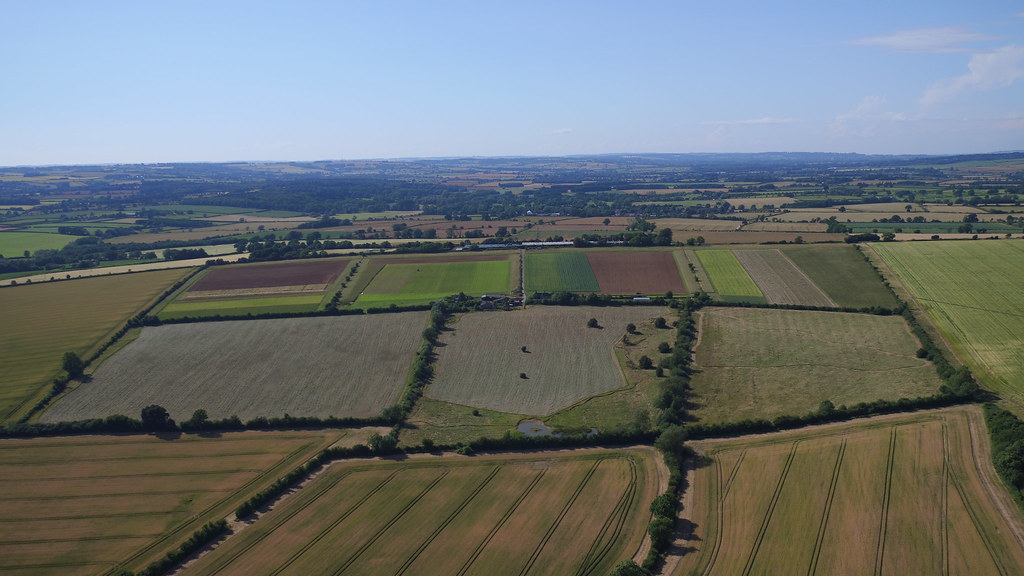
We were delighted to welcome around 30 volunteer tree planters to Honeydale on Saturday. Ostensibly the purpose of the planting was to enhance the natural flood alleviation works, an innovative partnership project between Cotswold Honeydale Farm and the Cotswold Rivers Trust, in an area where we’ve already created scrapes and ponds. But the event also had an important historical context.


The volunteers were marshalled by the Wychwood Project, a group that encourages people to understand, conserve and restore the rich mosaic of landscapes and wildlife habitats in what was formerly the Cotswold’s Forest - the ancient Royal Hunting Forest of Wychwood, within the boundaries of which Honeydale Farm firmly lies.

In medieval times, this was a place where deer were reserved for the King’s use and at Domesday in 1086, the Royal Forest of Wychwood covered much of what is now West Oxfordshire, stretching from the River Glyme to the east, the River Windrush to the south west, the smaller Sars Brook to the north and a section of the Thames to the south. This area would have also included meadows, cultivated open fields, heaths and downs and was one of the most wooded Forests in England. It fell into a gradual decline following the Tudor period, exacerbated by the Napoleonic wars, when timber was in demand for the navy.

The Wychwood Project, which covers all or part of 41 modern day parishes, from Taynton to Woodstock and from just south of Chipping Norton down to Northmoor, aims to enhance the environmental, cultural and historical features of the landscape, working closely with local communities.

As such, its supporters were very enthusiastic about our tree planting and turned out at Honeydale in force. It was a cold but clear day and it was truly heartening to see people of all ages, from all walks of life and from all over the Cotswolds, as well as further far afield such as High Wycombe and Leicestershire, working together. We had it all done within four hours, planting 2000 saplings including alder, hazel, field maple, willow, dogwood and sweet chestnut, which will later be harvested for firewood and to provide poles for hedge laying.

January - February

‘Natural’ Flood Management at Honeydale Farm.


An innovative partnership project between Cotswold Seeds and the Cotswold Rivers Trust has recently been completed at our Honeydale Farm site. The scheme re-routed the running spring at Honeydale to help reduce the likelihood of flooding along the Evenlode Valley and also create a new wetland habitat area for wildlife in the grass field at Honeydale. Simply put, the principle is to capture the flow upstream to prevent flooding further It is likely that the existing spring at Honeydale was diverted from its original field course at least 50 years ago, to a channel which ran downhill in a straight line along the central hedgerow. This was used as a way to ‘dry’ out the grassland and make it more productive for grazing animals and hay production. Although only a relatively small water flow the spring runs constantly all year, directly into the River Evenlode. This catchment is known to flood regularly, with a particularly bad flood in 2007 which caused over 50 homes to be damaged in the nearby downstream village of Ascott under Wychwood.

We sought the expert advice of Vaughan Lewis who runs the Company Windrush AEC Ltd, which has a long history of advising and implementing these type of projects. One of the aims is to provide a small scale demonstration of how a watercourse can be improved to reduce runoff and erosion. By holding up the flow of the water and allowing it to be released in a controlled way. The peak flow of water reaching the river is lowered during heavy rainfall, reducing the likelihood of flooding.The scheme created several small leaky dams known as attenuation bunds, connected by short lengths of meandering channel. Water is held back by the bund until the level reaches a perforated stone dam. Once this has been breached the water runs onto the next dam, repeating the process. In this way the amount of spring water entering the river, is reduced. Once water over-tops the final dam it is collected in a shallow scrape where excess will drain away into the subsoil. As well as attenuating runoff, the scheme will reduce the loss of fertilisers and nutrients from farmland into the River Evenlode.


The second part of this project is to plant the final water holding area with about half a hectare of trees, to form an infiltration zone. As the tree roots develop over time they create preferential pathways for water soakage to help excess water infiltrate into the subsoil. In addition trees themselves use up water to help them grow.Increased flood peaks, low summer flows and increased pesticide and fertiliser burdens have all been identified as damaging impacts on the river, which fails to meet Good Ecological Status under the Water Framework Directive. The project addresses all of these issues, albeit on a small scale. In addition it significantly improves local biodiversity, creating an important wetland habitat for local wildlife. Snipe have already been seen on the newly created scrape area. There is also a significant element of carbon capture associated with the planted trees, which will provide a sustainable and valuable source of firewood in time. Our aim is that the project will be used as an example for visitors such as landowners, land managers and other stakeholders to see techniques in which erosion, runoff and flooding can be managed in a catchment that has a history of flooding, overland erosion and damage to land and property. The expectation is that the principles of the project will be adopted by other landowners in the Evenlode valley and elsewhere in the country.

The project received financial support from Big Lottery Fund’s ‘Awards for All’, whose support is gratefully acknowledged.

Tree Planting

We finished our tree-planting in the first week of February. Tree planters, brothers, Neil and Colin Taylor, planted an area of 2.3 ha with around 6,000 shrubs and trees, including 450 metres of hedging.

The hedging runs along the line of the seeded/arable interface and is predominantly thorn (60%), with the rest comprising guelder rose, wayfaring tree, spindle, dogwood and a small amount of wild crab.

A 5m ride has been left between the hedge and edge of the main planting on the eastern and western side, with sinuous lines of planting creating scallops of ground adjacent to the ride which have been left as additional unplanted habitat. There’s also a 5m gap between the roadside deer fence and the edge of the trees.

The backbone of the central sections is made up of an average of 2500 trees per ha. made up of 800 field maple trees, 75 limes, 150 Beech, with birch planted to give some early nursing effect near the Beech areas. At either side of the backbone there are a mixture of 550 hazel, 175 blackthorn and 175 thorn. The outermost rows are planted in clumps of species, using groups of between 3 and 7 of the generally smaller stature plants - 375 Guelder Rose, 375 Wayfaring tree, 150 Spindle, 110 crab apples, 40 wild pears, 225 thorns, 75 dogwoods, plus 110 Bird Cherry and 75 Wild Cherry which are bigger and make a good edge in the field side mixtures. There are 75 Robinia plants in the field side mixture too.

Now let it rain!!

Birdboxes


As modern agricultural practices take much of the blame for the 50% decline in farmland birds, we are putting into place our plans to ensure we provide a little piece of bird heaven at Honeydale Farm!

In addition to all of the planting we have done, which in time should provide fabulous nesting sites and food supplies for the birds, the new habitats that will be created by our flood alleviation work, the supplementary feeding, plus the insect attracting seed mixtures due to be sown in the spring, we have just finished installing cosy bird boxes around the farm.

We have chosen the very long lasting Schwegler Woodcrete nest boxes. They come with a 25 year guarantee and are very solid indeed. We bought several different types to appeal to a wide variety of birds from sparrow terraces, swallow bowls, tit boxes to wren balls, an amazing array of luxury bird homes! We have put most of them around the farm buildings so that we can enjoy watching any inhabitants as they come and go. We inherited 7 feral farm cats when we bought the farm so with some expert advice from Louise Spicer of the Wychwood Project's Bird Aid programme, we had to try and ensure all the nest sites are safe from their attention.

Schwegler advice is that no minimum distance is required between birds. Two species can breed next to each other on the same tree. Depending on the site, (the more natural the better) and the amount of pests, up to 15 nest boxes per acre can be installed in woods, gardens etc.

We are determined to give the birds every chance to start their breeding season well fed and in good health and by providing just a bit of extra housing for some of them we hope to give plenty of them the opportunity to rear a succession of large broods of chicks. If, as we hope, we eventually end up with twice the number of birds on the farm, back to the pre war numbers once seen, can you imagine what double the volume of birdsong will sound like ?!

- Celene Wilkinson

December

Planning and a Partridge (but not in a pear tree!)

A year ago Nick Mottram from The Wychwood Project advised us on tree and shrub planting at Honeydale and amongst many great ideas, he suggested that we should speak with Tim Shardlow, Forestry Director, from Nicholsons Nurseries in North Aston. Tim has been really helpful and has been detailing a planting scheme since the summer which is now being implemented, with planting underway on seven acres near the road. This will provide a shelter belt to the four trials fields as well as a very useful, warm habitat for insects, birds and most mammals - except deer.


Roe deer are present at Honeydale and whilst they are pleasant to watch they are definitely not welcome in the new woodland and are being excluded with fencing to stop them eating the new planting. We are going to call the woodland Rebecca's Wood.

Honeydale’s Fencing Squad Leader is Tim, who does the planning and theoretical stuff and Bob Bishop and James Timmis who do the work!

We’ve also now marked out a slightly modified route for the spring water. We are going to create small dams and scrapes, a shallow area which will flood and is ideal for a wide range of wildlife but will also help prevent water running off Honeydale land to the valley below, which has suffered from flooding problems in the past.


Otherwise, December has been a relatively quiet month. The farm feels wintry and exposed and the birds less shy, venturing out to find food as it has turned colder. As we have some seed left over from our warehouse we are using this to provide supplementary bird feeding, as are many of our customers, though we are not doing it as part of HLS.

We’ve spotted an owl but we don’t know what sort yet, and we’ve also found an English Partridge. Sadly it was not sitting in a pear tree in Christmas spirit, but was laying dead and headless in the stubble. It was probably killed by a bird of prey but it’s a bit of a mystery since we’ve not seen any English Partridges on Honeydale before so are waiting and hoping that more may turn up.

We’re looking forward to 2015. Given that we are plant people we are particularly excited about the planting we are planning over the coming months.

November

Supplementary Bird Feeding Update:

The long, mild autumn we’ve been experiencing in the Cotswolds has resulted in there still being plenty of berries and other fruit available available for farmland birds to feed on and we’ve noticed that some of the supplementary bird seed has therefore not been needed and has remained on the ground.


To reduce this wastage we’ve cut back the amount of seed sown to just under a kilo every few days until the temperatures drop and we have evidence that more of the seed is being consumed in the feeding locations.

But if we have If we have more nights like we’ve had these past couple of weeks, with temperatures falling to -1°C, the farmland birds around Honeydale will be more and more in need of the extra food.

Successful shelter-belt establishment

The shelterbelt on the northern edge of the farm has established well, with a uniform covering along the entire length. We are expecting some barley volunteers in the establishment phase, but this should not be a long-term issue and we’re looking forward to seeing the wild flowers in the spring.

Sainfoin

The Sainfoin in the polytunnel has slowed down its growth for the winter but we have generally seen a good take of plants. However there does seem to be some difference in the growth habit with the majority growing to a low height, with a large basal rosette of leaves. A few have a much more upright growth habit and it’s generally these that have flowered this summer.


The usual management technique is to cut or lightly graze a crop of Sainfoin at the end of the first year of establishment to encourage new growth and remove any dead or dying leaves. We have seen some evidence of down mildew on a few plants, which will also be removed during cutting. An Allen Sythe was used to cut the crop at approximately 7 cm, after which the cuttings were removed. We have carried out similar management on a small patch of Sainfoin outside the poly tunnel.


Wild Flowers

The wild flowers were also cut back in a similar manner to the Sainfoin after they had finished flowering in October. Since this was carried out we have some of the species, notably Wild Carrot, Autumn Hawkbit and Ragged Robin, putting up new flower heads. It shows that the cutting rather than decreasing the flowering ability has actually increased the amount of flowers produced by the plant - the Wild Carrot produced 2 flower heads this summer and after cutting in October it now has 17!


Satisfied Sheep!

The sheep have temporarily gone from the Honeydale pasture to allow the grassland a period of rest and recovery which will provide an ‘early bite’ of fresh growth in the spring. It also helps to reduce the worm burden in the soil by stopping the input of worms in the animal faeces for a period.


September - October

September:

Polytunnel Harvest:


The plants in the polytunnel have been progressing well, with some of the annual wild flowers now shedding seed after a summer-long display. The Cotswold Common sainfoin plants have established particularly successfully, with some coming into flower. Our plan with this crop is to harvest the seed to preserve this important landrace.

Weaning the Lambs

The ewes and lambs were weaned earlier this month, with the ewes being taken to another pasture on a neighbouring farm in preparation for tupping in the near future. The lambs that have been kept on the Honeydale pasture look extremely healthy and some have been moved to the adjacent hay meadow. The fields they vacated have greened up well during the warm autumn so will offer some first class early grazing in the spring.


Shelter Belt

We have embarked on the creation of a new wildflower area at the top end of the farm, along with a shelter belt of trees to produce a low storey shrubby and glades habitat for farm and woodland birds. The stubble was cultivated by power-harrowing and the seed then broadcast from a quad bike and rolled in with a heavy flat-roll. We eagerly await the spring to see what appears!


Greedy Geese

Since the bales have been cleared from the stubble, we’ve seen an abundance of wildlife on Honeydale, including brown hares crouching on the skyline and several resident deer. Most recently, a flock of Canadian Geese has been grazing on the stubbles most mornings and evenings. We don’t want too many of them though, since they’re notoriously greedy!


October

Filling the Hungry Gap

We had a visit from the appropriately named, Dr Alan Larkman, Chair of the Oxfordshire Ornithological Society, and Louise Spicer and her colleague Claire from BirdAid - which offers a lifeline to birds during winter - who are working together within the Wychwood Project to promote supplementary feeding.

Providing supplementary food for seed-eating birds, such as the Yellowhammer, Grey Partridge, Tree Sparrow, Corn Bunting, Linnet and Skylark, has been shown to significantly increase their chances of survival during the winter months.

From the middle of December to the middle of March, seed-eating farmland birds can struggle to find enough food to sustain themselves. This is known as the ‘hungry gap’ during which natural food sources and sown bird survival mixtures are often exhausted, leaving the lives of some seeding eating species in the balance, especially in harsh freezing winter conditions and cold springs.

New environmental stewardship schemes are providing funding for supplementary feeding but, like many other farmers and landowners, we’re funding it ourselves, using our small seeds - including millet, linseed, oilseed rape and radish.

Half of the land at Honeydale is stubble now - a mix of Barley Volunteer (and Barley Grain) mixed with Field Madder, Dwarf Spurge, Chickweed, Speedwell, Field Pansy, and Rough Hawkbit, which the small farmland birds have been feeding on, so we’ll be supplementary feeding on these areas where the birds seem to be most comfortable.

Louise was delighted to tell us that Corn Buntings have been sighted by a cyclist further down the valley, so we’re hoping they may visit Honeydale soon.

Hedge Fund Management

Ornithologist Dr Larkman was also very excited to see the mature hedgerows at Honeydale which he described as ‘a great asset for the bird community.’ We’re now looking at how best to manage our own ‘hedge fund’, with plans to retain a large area of the hedges and rejuvenate a small percentage by ‘laying’ them, thereby promoting traditional agricultural skills.

July-August

Making Hay and Combining Barley:

We’ve brought in our first Honeydale harvest. Definitely the most important events that have taken place on the farm over the past few weeks has been the hay-making in July and combining the barley earlier this month.


Nigel Adams, who grazes his sheep at Honeydale, brought his mower and tractor to cut and bale the hay meadow which produced 130 round bales and a further 40 small bales. The hay was cut on one of the many hot sunny days, so conditions were ideal, and Nigel was pleased that it made really well and was of good quality to use as animal fodder for the winter.

Our malting barley was combined with the help of the Swinbrook estate who arrived with two big tractors and trailers and a 10.5 metre combine complete with drivers. 


I told Jim, who farmed Honeydale for many years before we took it over last year, that the combine was on its way and he was very excited and pleased that our first harvest had been successful. The barley straw has now been baled and sold on to farmers in Wales for livestock bedding, as we don’t have a requirement for it.


This means that the 12 month baseline cycle we have been following in order to observe the established practices on the farm before deciding what changes to make is now complete.

What’s particularly important about the barley for us is that it has only been in the ground for four and a half months. During the rest of the year the pattern has been for this field to be left as stubble. While this is an easy and low input method of farming it means that the soil has been left inactive for nearly three quarters of the year and this is something we’re going to change, starting from now. We’re planning to grow as much green matter as possible, to improve the soil and produce greater quantities of food. We’re looking at what we can grow to best improve the fertility and what can be achieved if the soil is more active.

The good thing about the stubble was that the skylarks and hares liked it, but we will still continue to provide some of this habitat on the farm.

Polytunnel

Living on Honeydale over the summer months, I’ve had chance to see what’s been growing in the polytunnel and observe the changes on daily basis.

Earlier in the year we tried to plant a selection of the seeds we sell at Cotswold Grass Seeds and it’s particularly pleasing to see that the sainfoin has established well. There’s a noticeable difference between the growth habitat of some plants with the majority having a large rosette of basal leaves, while some have put up ‘heads’ and are in flower.

The majority of the cover crop examples have also taken and the cornfield annuals have flowered well. The buckwheat was the first to get going and has now gone over, making way for other species such as borage and annuals like crimson and persian clover.

Unfortunately, most of the brassicas have been badly affected by flea beetle which even struck the mustard and fodder radish which flowered early and are now setting seed.


The dwarf sorghum and millet got away quickly though and the sunflower and quinoa are catching up.

From our spring sowing the earliest wildflowers to bloom were the hawkbit, musk mallow and yellow trefoil while the self heal and lady bedstraw are just starting to come into flower now. The yellow rattle and cowslip did not germinate because they need to go through vernalisation (cold snap) first.

Outside the tunnel, I’ve spotted a clutch of 5 partridge chicks at the top of the drive. They’re very young and not flying yet.

As autumn approaches we’re planning on re-directing the watercourse in the middle field away from the hedge and into several shallow pools to create a feature and create better habitats for wildlife.

June

Bird & Mammal Survey:

Perhaps the most significant thing that’s happened this month is that we’ve received the results of the bird and mammal survey from ecologist Dr Richard Broughton from the Centre for Ecology and Hydrology, following his visits to Honeydale earlier this year.


The main aim of the survey was to collect baseline information on the breeding bird community of Honeydale Farm. A secondary aim was to record any mammal species and activity where possible, through observation of animals, tracks and signs. The scientific report, which extends to 30 pages including mapping, makes fascinating reading. Here are the summary points and highlights:
The bird community of Honeydale Farm is rich and diverse, with a total of 44 species recorded. Of these, at least 24 species were found breeding on site, 9 of which are of conservation interest as nationally declining species.

For its size, the farm has particularly good populations of three bird species which are of conservation priority, having undergone serious national declines in recent decades: Yellowhammer, Linnet and Skylark. These are the most important aspect of the birdlife on the farm.

At least five (and possibly seven) bird species used the farm buildings for nesting: Swallow, Collared Dove, House Sparrow, Great Tit, Pied Wagtail (and possibly Wren and Blackbird).

Of the mammals, six medium-large species were recorded: Roe Deer, Muntjac Deer, Fox, Badger, Brown Hare and Rabbit. A further three species of small mammal were recorded (Common Shrew, Bank Vole, Mole), although the survey was not geared to sampling the small mammals, and other species almost certainly occur on site. Grass Snake was also recorded.

Good numbers of Brown Hares are present on the farm, mostly in the barley fields, and as a declining species these are the most valuable aspect of the larger mammal biodiversity.

There is some excellent habitat for farmland birds and mammals on the farm, including impressive ancient hedgerows and the unimproved grassland of the rich and beautiful meadow field, and the close proximity of juxtaposing habitats underpins much of the birdlife.

Some enhancements are possible, such as targeted nestboxes or agri-environment options (field margins and plots), although maintaining some of the existing key habitat features are likely the most important efforts that can be made to securing the bird and mammal conservation interest of the farm.

Sheep-Shearing


The 70 ewes were sheared on one very hot afternoon. The flock of commercial sheep belongs to the Adams family who run a traditional mixed farm in Leafield. Son Ed and his friend Ollie Coster took charge of the shearing while father, Nigel, pushed the sheep into the shearing pen and our Sam rolled out the fleeces and put them into woolsacks. The wool is now on its way to a central depot, from there it will be marketed by the British Wool marketing Board which coordinates the collection and sale of wool from registered producers.


It was heartening to hear from Nigel that the lambs are doing really well on the permanent grass at Honeydale. Just imagine the results we will get when some proper mixtures are sown!.

Orchids in the Hay Meadow


The Hay Meadow at Honeydale is permanent, low input unimproved grassland which is currently part of an Environmentally Sensitive Area Scheme (ESA). Initially, when we first bought the farm, the meadow was filled with grasses and as winter turned to spring cowslips, lady’s smock, red clover and meadow buttercup came into flower. Jim, the farmer, had told us that there were orchids in the field but it’s been a lovely surprise to see so many, literally hundreds of Pyramidal Orchids and Bee Orchids.

We even found some sainfoin and now we see field scabious and lesser knapweed too. We’re considering introducing more species into the sward by over seeding to further enhance it.

Barley

Another surprise was the wild oats popping up in our 60 acres of barley. In time-honoured fashion we’ve hand rouged the majority of the area. The team included, Mike, Mac and Mark from our warehouse together with 16 year old Lewis who is on work experience with us. Hopefully it’s not put him off farming!


Malting barley has been grown at Honeydale for many years and as part of our policy of observing the land for twelve months before making any significant changes, we sowed the same this year. It is now fully out in ear and starting to turn in time for us to harvest in the middle of August. We’re fortunate to be able to work with the Swinbrook Estate, which also grow malting barley, giving us access to machinery and combine harvester which we don’t have on our small farm.

May

Owls, ponds and cats:

The ‘barn owl men’ who visited us in May describe themselves as being like the famous trio from ‘Last of the Summer Wine,’ and so they are. They’re all retired now but Ian Anderson was involved with the Ministry of Agriculture, Farms and Fisheries and now all 3 devote hours to helping to protect barn owls. There are known to be barn owls in the local area so we’re going to put boxes up in our trees to encourage them to nest at Honeydale.


Pascale Nicolet is an expert in freshwater habitats and is advising on how we can create wet areas, scrapes and interlinked small ponds, to attract more wildlife.

We already have feral cats. Six of them. The local cat rescue centre has caught and neutered them so now they’ll live out their days at Honeydale, keeping the rats and mice down.

Tree Planting

We’re working on plans for the autumn to plant native deciduous trees, shrubs and hedges over a seven acre area on the northern edge of the farm. We’re also talking to local architect Alex Corfield, a renowned planner in the Cotswolds. The buildings at Honeydale need replacing and our vision is to build an agricultural centre for sharing knowledge amongst farmers, land managers, the scientific community, college students, right through to school children. But we don’t want to rush into anything until we are absolutely clear about what will work best - as with the rest of the farm, our philosophy is plan before action.

Over the coming months the sheep will leave, the barley will be combined in August and the straw baled. We don’t own a combine but Sam has maintained links with Swinbrook Estate who will come over and harvest our crops. We recognise as many small farmers do that a business like this cannot exist in isolation but needs to be part of a mutually supportive network.

Ian Wilkinson