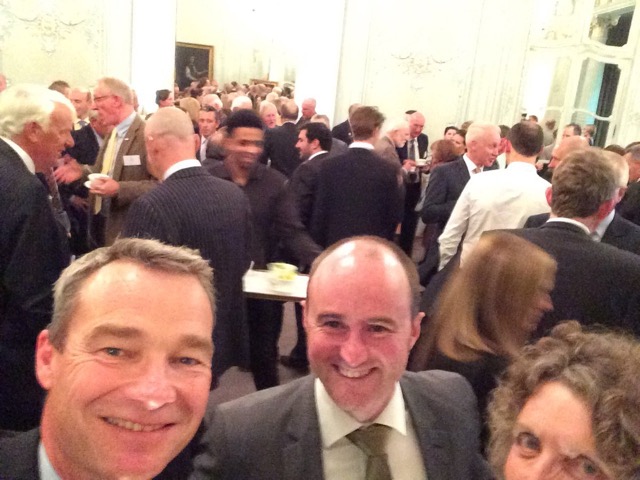
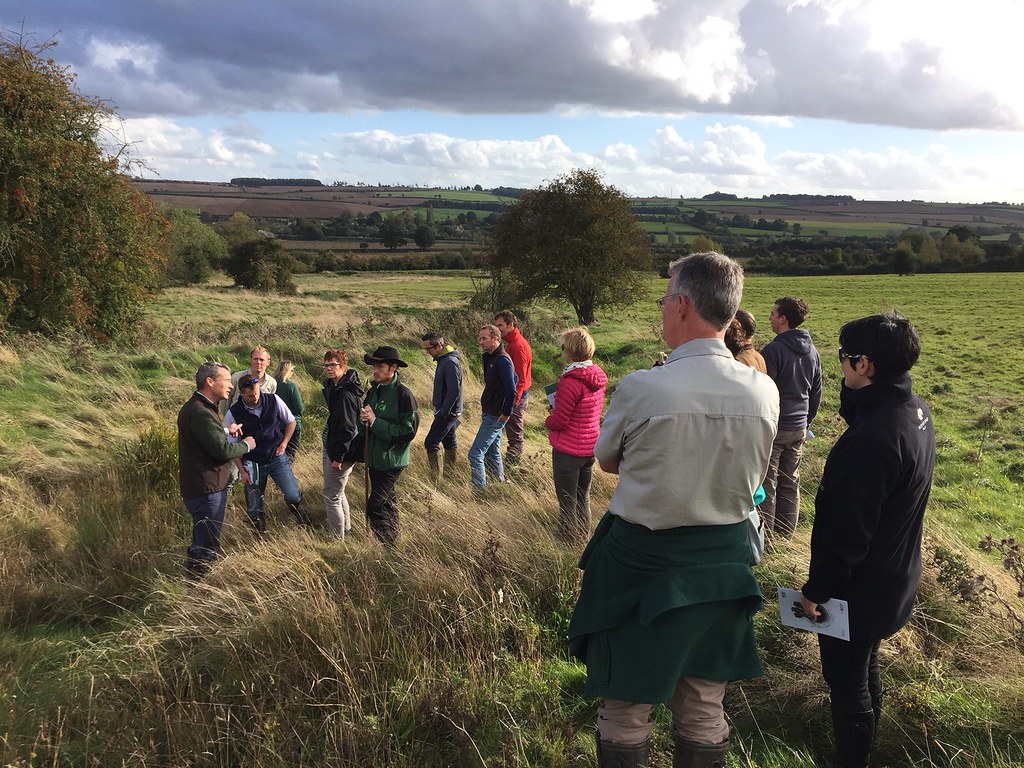
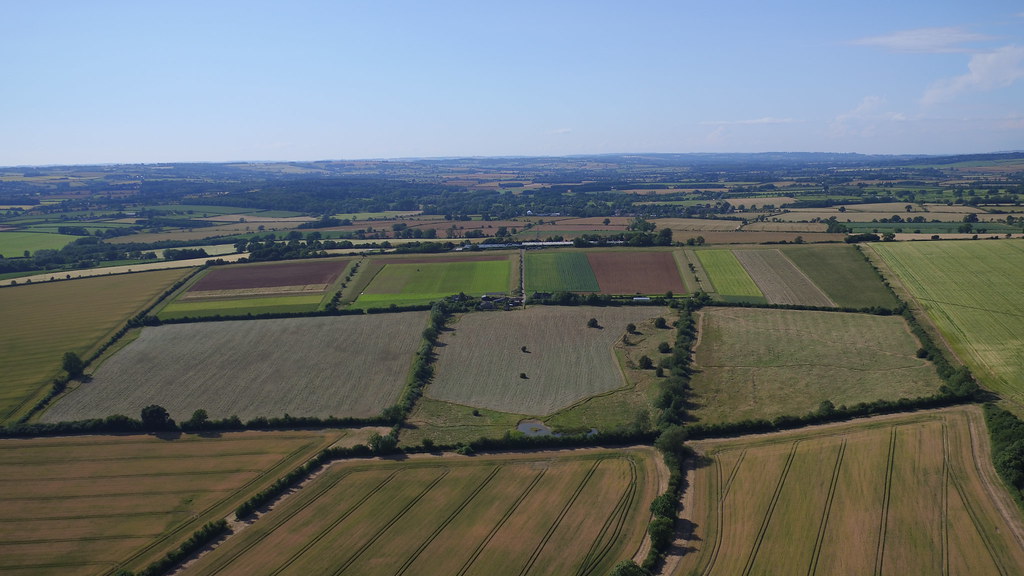
A group of landowners, farmers, academics and business owners from the Cotswolds and further afield visited Honeydale this weekend for a meeting of minds and sharing of opinions and viewpoints. Ian Wilkinson led a farm walk, looking at the importance of farming diversity and sustainable practices, from soil through to food production.
Although the development of Honeydale as a Centre for Farming and Food is in its preliminary stages and as yet we have no buildings and facilities to host events, we’ve made great progress with the farm itself, and we’re already welcoming visitors who are keen to see the work we are doing on the land.
This week Ian led a workshop for the National Trust farm team and tenant farmers from all over the UK. Delegates came from as far afield as Devon, Somerset, Wiltshire and Wales in order to get a better understanding of using diverse leys, herbal leys and mob-grazing, particularly in relation to sheep.

The farm walk and talk explored the health of the farm from the soil up, beginning with an exploration of the importance of managing the soil for fertility, before looking at establishing the ley. Grazing management, electric fencing, water, crop rotation and integrating plants, livestock and wildlife were also covered.
We were delighted to welcome around 30 volunteer tree planters to Honeydale on Saturday. Ostensibly the purpose of the planting was to enhance the natural flood alleviation works, an innovative partnership project between Cotswold Honeydale Farm and the Cotswold Rivers Trust, in an area where we’ve already created scrapes and ponds. But the event also had an important historical context.

The volunteers were marshalled by the Wychwood Project, a group that encourages people to understand, conserve and restore the rich mosaic of landscapes and wildlife habitats in what was formerly the Cotswold’s Forest - the ancient Royal Hunting Forest of Wychwood, within the boundaries of which Honeydale Farm firmly lies.
In medieval times, this was a place where deer were reserved for the King’s use and at Domesday in 1086, the Royal Forest of Wychwood covered much of what is now West Oxfordshire, stretching from the River Glyme to the east, the River Windrush to the south west, the smaller Sars Brook to the north and a section of the Thames to the south. This area would have also included meadows, cultivated open fields, heaths and downs and was one of the most wooded Forests in England. It fell into a gradual decline following the Tudor period, exacerbated by the Napoleonic wars, when timber was in demand for the navy.
The Wychwood Project, which covers all or part of 41 modern day parishes, from Taynton to Woodstock and from just south of Chipping Norton down to Northmoor, aims to enhance the environmental, cultural and historical features of the landscape, working closely with local communities.
As such, its supporters were very enthusiastic about our tree planting and turned out at Honeydale in force. It was a cold but clear day and it was truly heartening to see people of all ages, from all walks of life and from all over the Cotswolds, as well as further far afield such as High Wycombe and Leicestershire, working together. We had it all done within four hours, planting 2000 saplings including alder, hazel, field maple, willow, dogwood and sweet chestnut, which will later be harvested for firewood and to provide poles for hedge laying.
.png)