Showing posts with label Polytunnel. Show all posts

Launch of the Honeydale Kitchen Garden

Exciting news. We’re very pleased to welcome The Kitchen Garden People who have begun setting up the Honeydale Kitchen Garden.


Emma, Christine and Dan have been running a Community Supported Agriculture (CSA) scheme in Chadlington, near Honeydale, for the past couple of years. Dan is passionate about growing and is a genius at growing all sorts of different plants, including herbs and lesser known varieties of lettuce. He worked as a grower for Cultivate for many years, growing local food for local people in Oxford. Emma grew up on an environmentally-focused farm in Wales and is in charge of most of the behind-the-scenes admin and communications. Christine, trained as an agricultural engineer, is founder of the Charlbury Green Hub, and is also an apple expert. They all enjoy being outside, getting their hands dirty and feel passionate about combining conservation and farming.


‘CSA schemes are a way of being able to supply vegetables and other fresh produce to local people, eliminating waste and the risk to the grower,’ explains Emma. ‘It removes the danger of producing a wonderful crop and taking it to market, only to find that not enough people come to buy it.’

The food is incredibly healthy. Because it’s not grown for shelf life, and can be picked at just the right time and harvested and sold on the same day, the nutritional value is much better. No pesticides are used and it also allows for the reintroduction of different varieties. A century ago there were 288 different beetroots but now there are only 17. Due to the demands of supermarket shelf lives, lettuce varieties have plummeted from 417 to 36. Emma explains that they are free to choose what they grow for taste rather than shelf-life which makes each share reminiscent of what her grandpa Bob used to grow on his allotment with all it’s flavour and scent.

The CSA scheme is extremely practical. People pay a monthly subscription of £25 for seasonal food and whatever is produced that week is simply divided up so that everyone gets an equal share. ‘It does require a change in mindset,’ Emma explains. ‘Because some weeks you get more than you are paying for that week, and others you get less, but all our subscribers have had a £160 saving over the year so it really is a win-win.


‘A weekly email is sent to members telling them what to expect in their share to be collected on the Friday and there’s lots of variety. There are salads all year round thanks to the polytunnels. We only had one week when we weren’t able to harvest anything, during the cold spell, when the salad just didn’t thaw.’

The Chadlington Kitchen Garden began in 2016 on a ⅕ acre site at The Grey House in the village and Emma, Christine and Dan spent over a year growing and selling ad hoc. The plot is not much bigger than an allotment but there was a polytunnel, greenhouse and asparagus bed which meant that they were able to grow and sell asparagus straight away. The ⅕ acre was soon providing for 30 members. It has a lovely history too as it used to be Mrs Moore’s herb farm. Fred and Pete used to work for Mrs Moore and they bought the workers cottages after she died and now they peer over the fence at The Kitchen Garden People and like to see that the land is producing again. They are very helpful and insightful too, says Emma. ‘Pete sees us planting and says, “there’s frost in the air, wait a week.” And he’s always right.’


The weekly collection takes place opposite the gates at Chadlington Primary School. The idea being that lots of people are going there anyway, so it’s convenient but also keeps the carbon footprint low. It also means the children get to take part and they’ve visited the kitchen garden to talk about the food web and worms and practice their maths, helping to divide up equal shares of the salad.


The Kitchen Garden People at Honeydale will operate in a similar way, but on a larger scale, which will be wonderful to see.

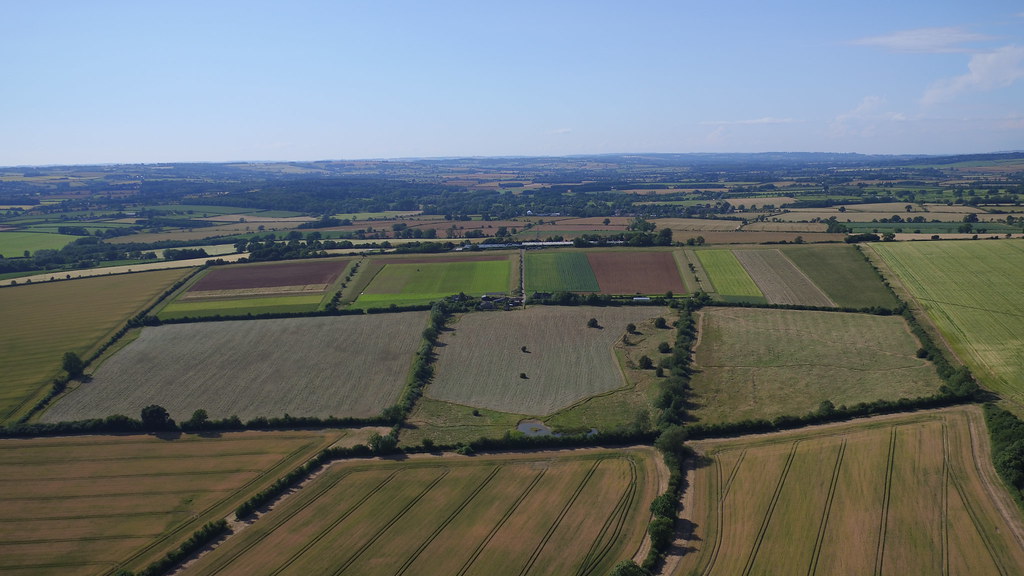
The 1.5 acre fieldscale site at Honeydale and large polytunnel will give Emma, Dan and Christine scope to expand. It will take a few months to get everything established, and subscriptions are full for this year, but the aim is that by March 2019 the Honeydale Kitchen Garden has the potential to provide for a hundred or so subscribers on the salad share, or fewer who would perhaps want to pay more for a bigger box (so they won’t need to go to the supermarket at all!)

The plan is to grow salads and veg including asparagus, kale, rainbow chard, courgettes, spinach, purple sprouting broccoli, leaf beet spinach, spring onions, flower sprouts, winter squash, onions, leeks, cucumbers, peppers, florence fennel, french beans, garlic, parsley, coriander, mustard, and different varieties of lettuce as well as redcurrants, pears, plums and rhubarb. It will also be possible to add some more root vegetables, and of course there’ll be the different varieties of apples from local orchards and the Honeydale Heritage Orchard. The beauty of these is that they will be ready for picking at different times .

Interested subscribers for 2019 should contact Emma on thekitchengardenpeople@gmail.com

November

Supplementary Bird Feeding Update:

The long, mild autumn we’ve been experiencing in the Cotswolds has resulted in there still being plenty of berries and other fruit available available for farmland birds to feed on and we’ve noticed that some of the supplementary bird seed has therefore not been needed and has remained on the ground.


To reduce this wastage we’ve cut back the amount of seed sown to just under a kilo every few days until the temperatures drop and we have evidence that more of the seed is being consumed in the feeding locations.

But if we have If we have more nights like we’ve had these past couple of weeks, with temperatures falling to -1°C, the farmland birds around Honeydale will be more and more in need of the extra food.

Successful shelter-belt establishment

The shelterbelt on the northern edge of the farm has established well, with a uniform covering along the entire length. We are expecting some barley volunteers in the establishment phase, but this should not be a long-term issue and we’re looking forward to seeing the wild flowers in the spring.

Sainfoin

The Sainfoin in the polytunnel has slowed down its growth for the winter but we have generally seen a good take of plants. However there does seem to be some difference in the growth habit with the majority growing to a low height, with a large basal rosette of leaves. A few have a much more upright growth habit and it’s generally these that have flowered this summer.


The usual management technique is to cut or lightly graze a crop of Sainfoin at the end of the first year of establishment to encourage new growth and remove any dead or dying leaves. We have seen some evidence of down mildew on a few plants, which will also be removed during cutting. An Allen Sythe was used to cut the crop at approximately 7 cm, after which the cuttings were removed. We have carried out similar management on a small patch of Sainfoin outside the poly tunnel.


Wild Flowers

The wild flowers were also cut back in a similar manner to the Sainfoin after they had finished flowering in October. Since this was carried out we have some of the species, notably Wild Carrot, Autumn Hawkbit and Ragged Robin, putting up new flower heads. It shows that the cutting rather than decreasing the flowering ability has actually increased the amount of flowers produced by the plant - the Wild Carrot produced 2 flower heads this summer and after cutting in October it now has 17!


Satisfied Sheep!

The sheep have temporarily gone from the Honeydale pasture to allow the grassland a period of rest and recovery which will provide an ‘early bite’ of fresh growth in the spring. It also helps to reduce the worm burden in the soil by stopping the input of worms in the animal faeces for a period.


September - October

September:

Polytunnel Harvest:


The plants in the polytunnel have been progressing well, with some of the annual wild flowers now shedding seed after a summer-long display. The Cotswold Common sainfoin plants have established particularly successfully, with some coming into flower. Our plan with this crop is to harvest the seed to preserve this important landrace.

Weaning the Lambs

The ewes and lambs were weaned earlier this month, with the ewes being taken to another pasture on a neighbouring farm in preparation for tupping in the near future. The lambs that have been kept on the Honeydale pasture look extremely healthy and some have been moved to the adjacent hay meadow. The fields they vacated have greened up well during the warm autumn so will offer some first class early grazing in the spring.


Shelter Belt

We have embarked on the creation of a new wildflower area at the top end of the farm, along with a shelter belt of trees to produce a low storey shrubby and glades habitat for farm and woodland birds. The stubble was cultivated by power-harrowing and the seed then broadcast from a quad bike and rolled in with a heavy flat-roll. We eagerly await the spring to see what appears!


Greedy Geese

Since the bales have been cleared from the stubble, we’ve seen an abundance of wildlife on Honeydale, including brown hares crouching on the skyline and several resident deer. Most recently, a flock of Canadian Geese has been grazing on the stubbles most mornings and evenings. We don’t want too many of them though, since they’re notoriously greedy!


October

Filling the Hungry Gap

We had a visit from the appropriately named, Dr Alan Larkman, Chair of the Oxfordshire Ornithological Society, and Louise Spicer and her colleague Claire from BirdAid - which offers a lifeline to birds during winter - who are working together within the Wychwood Project to promote supplementary feeding.

Providing supplementary food for seed-eating birds, such as the Yellowhammer, Grey Partridge, Tree Sparrow, Corn Bunting, Linnet and Skylark, has been shown to significantly increase their chances of survival during the winter months.

From the middle of December to the middle of March, seed-eating farmland birds can struggle to find enough food to sustain themselves. This is known as the ‘hungry gap’ during which natural food sources and sown bird survival mixtures are often exhausted, leaving the lives of some seeding eating species in the balance, especially in harsh freezing winter conditions and cold springs.

New environmental stewardship schemes are providing funding for supplementary feeding but, like many other farmers and landowners, we’re funding it ourselves, using our small seeds - including millet, linseed, oilseed rape and radish.

Half of the land at Honeydale is stubble now - a mix of Barley Volunteer (and Barley Grain) mixed with Field Madder, Dwarf Spurge, Chickweed, Speedwell, Field Pansy, and Rough Hawkbit, which the small farmland birds have been feeding on, so we’ll be supplementary feeding on these areas where the birds seem to be most comfortable.

Louise was delighted to tell us that Corn Buntings have been sighted by a cyclist further down the valley, so we’re hoping they may visit Honeydale soon.

Hedge Fund Management

Ornithologist Dr Larkman was also very excited to see the mature hedgerows at Honeydale which he described as ‘a great asset for the bird community.’ We’re now looking at how best to manage our own ‘hedge fund’, with plans to retain a large area of the hedges and rejuvenate a small percentage by ‘laying’ them, thereby promoting traditional agricultural skills.

July-August

Making Hay and Combining Barley:

We’ve brought in our first Honeydale harvest. Definitely the most important events that have taken place on the farm over the past few weeks has been the hay-making in July and combining the barley earlier this month.


Nigel Adams, who grazes his sheep at Honeydale, brought his mower and tractor to cut and bale the hay meadow which produced 130 round bales and a further 40 small bales. The hay was cut on one of the many hot sunny days, so conditions were ideal, and Nigel was pleased that it made really well and was of good quality to use as animal fodder for the winter.

Our malting barley was combined with the help of the Swinbrook estate who arrived with two big tractors and trailers and a 10.5 metre combine complete with drivers. 


I told Jim, who farmed Honeydale for many years before we took it over last year, that the combine was on its way and he was very excited and pleased that our first harvest had been successful. The barley straw has now been baled and sold on to farmers in Wales for livestock bedding, as we don’t have a requirement for it.


This means that the 12 month baseline cycle we have been following in order to observe the established practices on the farm before deciding what changes to make is now complete.

What’s particularly important about the barley for us is that it has only been in the ground for four and a half months. During the rest of the year the pattern has been for this field to be left as stubble. While this is an easy and low input method of farming it means that the soil has been left inactive for nearly three quarters of the year and this is something we’re going to change, starting from now. We’re planning to grow as much green matter as possible, to improve the soil and produce greater quantities of food. We’re looking at what we can grow to best improve the fertility and what can be achieved if the soil is more active.

The good thing about the stubble was that the skylarks and hares liked it, but we will still continue to provide some of this habitat on the farm.

Polytunnel

Living on Honeydale over the summer months, I’ve had chance to see what’s been growing in the polytunnel and observe the changes on daily basis.

Earlier in the year we tried to plant a selection of the seeds we sell at Cotswold Grass Seeds and it’s particularly pleasing to see that the sainfoin has established well. There’s a noticeable difference between the growth habitat of some plants with the majority having a large rosette of basal leaves, while some have put up ‘heads’ and are in flower.

The majority of the cover crop examples have also taken and the cornfield annuals have flowered well. The buckwheat was the first to get going and has now gone over, making way for other species such as borage and annuals like crimson and persian clover.

Unfortunately, most of the brassicas have been badly affected by flea beetle which even struck the mustard and fodder radish which flowered early and are now setting seed.


The dwarf sorghum and millet got away quickly though and the sunflower and quinoa are catching up.

From our spring sowing the earliest wildflowers to bloom were the hawkbit, musk mallow and yellow trefoil while the self heal and lady bedstraw are just starting to come into flower now. The yellow rattle and cowslip did not germinate because they need to go through vernalisation (cold snap) first.

Outside the tunnel, I’ve spotted a clutch of 5 partridge chicks at the top of the drive. They’re very young and not flying yet.

As autumn approaches we’re planning on re-directing the watercourse in the middle field away from the hedge and into several shallow pools to create a feature and create better habitats for wildlife.