Spring at Honeydale

Spring at Honeydale


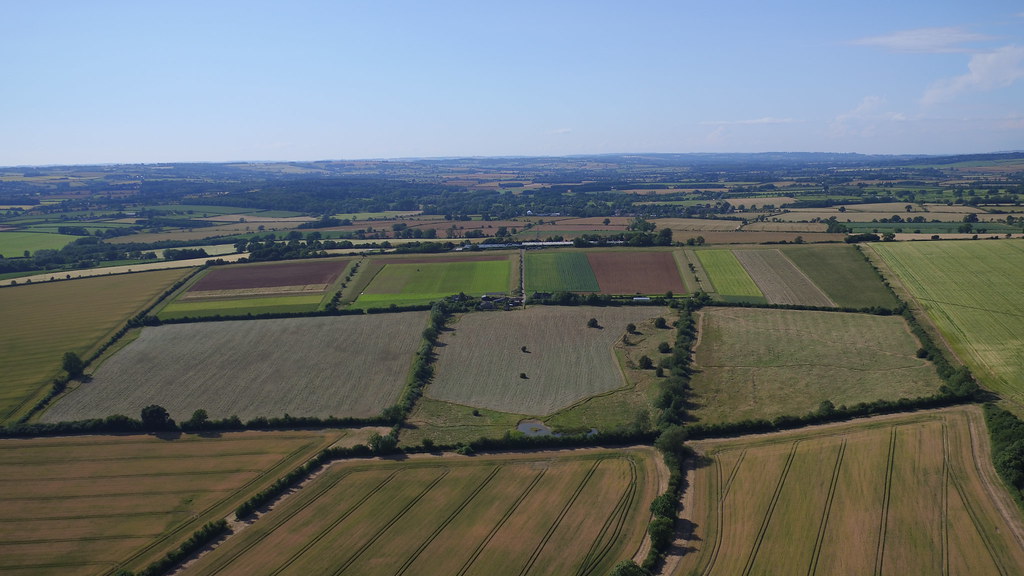
We’ve been planting grass and wildflower margins at the edges of the fields to create pathways to walk around and we’ve also sown our Dry Land Herbal Ley in one of the arable fields. The seeds were broadcast with a spinner before rolling in. For many years the 11 acre field was used for growing barley so the soil has been rather neglected and the aim is that the herbal ley, which will be down for 4 years, will help to remedy this. We will be watching the growth of the different species contained in the ley with much interest. It rained all day after we planted it so we’re expecting to see the first shoots in a week or so. Since there’s a water source nearby, the plan is to manage the field with livestock, mob grazing with sheep. 

We’re hoping to harvest seeds from the sainfoin crop in the polytunnel, so we’ve introduced bumble bees to pollinate the plants.


The wildflower field is blooming with cowslips, red clover, tufted vetch, lady’s smock, buttercups, yellow rattle, birdsfoot trefoil, sorrel, hedge bedstraw and bee orchids, growing among the sweet vernal grass, meadow foxtail, and other meadow grasses.

The sheep are grazing well on the lush spring growth, with the lambs growing particularly strongly, along with the ewes which we will be shearing soon.


Barley

Now the soil has warmed up we’ve planted a strip of barley in each the arable fields, a total area of about 4ha, retaining what was grown on the farm before, and it’s already started chitting. Get the combine greased up - it looks as if we have got a crop!

Sam has topped the new wildflower area on what was previously arable land, which often has a problem with grass weeds, especially blackgrass. The blackgrass is an annual so cutting it should control it and stop it shedding seed. The wild flowers in the same area are a mix of perennials and annuals so it will be interesting to see whether the cornfield annuals come back this year. At Cotswold Seeds we are regularly asked for advice about how to manage wild flower meadows and weeds so it will be interesting to see what happens on our own farm.


April

We have now power harrowed and rolled the fields that are to be sown this spring. But...its gone dry so we now hope for rain and have decided not to sow anything till rain is on the horizon.


The ewes and lambs continue to increase in number as spring finally arrives.

Ploughing

The fields where spring barley was formerly grown on Honeydale were ploughed a couple of weeks ago by Nigel Adams. We will be sowing sainfoin, herbal leys, green manures and experimental seed plots over the next few weeks, once we have obtained suitable seed beds and the weather consistently warms up.


Forage Legumes - Difficult for Farmers to Resist?

A presentation we've been giving to agricultural colleges, international symposia and farming groups on the many benefits of seed mixtures containing legumes. Shot on location at Honeydale Farm!
 

I Got a Brand New Combine Harvester…

...so The Wurzels famously sang. Well this shiny red Massey Ferguson 16 is certainly new to us, but it’s actually 25 years old.


Harry, as we have named him, arrived at Cotswold Honeydale Farm on a grey, rainy day in March and we’ve not even started sowing the fields yet. He’ll be spending the next few months in the bar. But we’re very pleased to have him, as you can see from Sam’s smile!

Most farmers require maximum capacity combining, but since we will be growing research plots for our seed mixtures, we needed a combine capable of dealing with small areas. So when we saw this one advertised on EBay, we couldn’t resist having it transported up from Dorset.

‘I got a brand new combine harvester and I’ll give you the key.’ That song charted back in the record breaking hot summer of 1976. So here’s hoping for some sunshine soon, and a good growing season.

Cotswold Bees & Cotswold Seeds

Part of our plans for Honeydale Farm include beekeeping, and Cotswold Seeds Manager Paul Totterdell, who is keen to be our resident bee man, has enrolled on a course with Cotswold Bees, part of the North Cotswold Beekeepers’ Association, which provides training, services and equipment.


There’s no disputing the importance of bees as pollinators vital to our food chain and for genetic sustainability, nor that species have been in decline for a number of years due to a variety of factors, including intensive farming. But a new study by researchers at Sussex University, published in ‘Molecular Ecology’ this month, has confirmed that planting farmland with strips of flowers can significantly boost the number of wild bees. This is something which we’ve been determined to achieve at Honeydale, using Cotswold Seeds’ Pollen & Nectar Mix and Wildflower Mix as well as growing bee-friendly crops such as sainfoin.

Paul will be learning everything from how to set up an apiary and site bees, to the components of a hive, frame building and the beekeeping year and will be looking to introduce bees at Honeydale this summer. If you have any suggestions for him please email them onto pault@cotswoldseeds.com

Barn Owls

We sighted a barn owl at Honeydale last night and Sam saw two the night before. Fingers crossed they’re a mating pair.


Historic Tree Planting at Honeydale

We were delighted to welcome around 30 volunteer tree planters to Honeydale on Saturday. Ostensibly the purpose of the planting was to enhance the natural flood alleviation works, an innovative partnership project between Cotswold Honeydale Farm and the Cotswold Rivers Trust, in an area where we’ve already created scrapes and ponds. But the event also had an important historical context.


The volunteers were marshalled by the Wychwood Project, a group that encourages people to understand, conserve and restore the rich mosaic of landscapes and wildlife habitats in what was formerly the Cotswold’s Forest - the ancient Royal Hunting Forest of Wychwood, within the boundaries of which Honeydale Farm firmly lies.

In medieval times, this was a place where deer were reserved for the King’s use and at Domesday in 1086, the Royal Forest of Wychwood covered much of what is now West Oxfordshire, stretching from the River Glyme to the east, the River Windrush to the south west, the smaller Sars Brook to the north and a section of the Thames to the south. This area would have also included meadows, cultivated open fields, heaths and downs and was one of the most wooded Forests in England. It fell into a gradual decline following the Tudor period, exacerbated by the Napoleonic wars, when timber was in demand for the navy.

The Wychwood Project, which covers all or part of 41 modern day parishes, from Taynton to Woodstock and from just south of Chipping Norton down to Northmoor, aims to enhance the environmental, cultural and historical features of the landscape, working closely with local communities.

As such, its supporters were very enthusiastic about our tree planting and turned out at Honeydale in force. It was a cold but clear day and it was truly heartening to see people of all ages, from all walks of life and from all over the Cotswolds, as well as further far afield such as High Wycombe and Leicestershire, working together. We had it all done within four hours, planting 2000 saplings including alder, hazel, field maple, willow, dogwood and sweet chestnut, which will later be harvested for firewood and to provide poles for hedge laying.

January - February

‘Natural’ Flood Management at Honeydale Farm.


An innovative partnership project between Cotswold Seeds and the Cotswold Rivers Trust has recently been completed at our Honeydale Farm site. The scheme re-routed the running spring at Honeydale to help reduce the likelihood of flooding along the Evenlode Valley and also create a new wetland habitat area for wildlife in the grass field at Honeydale. Simply put, the principle is to capture the flow upstream to prevent flooding further It is likely that the existing spring at Honeydale was diverted from its original field course at least 50 years ago, to a channel which ran downhill in a straight line along the central hedgerow. This was used as a way to ‘dry’ out the grassland and make it more productive for grazing animals and hay production. Although only a relatively small water flow the spring runs constantly all year, directly into the River Evenlode. This catchment is known to flood regularly, with a particularly bad flood in 2007 which caused over 50 homes to be damaged in the nearby downstream village of Ascott under Wychwood.

We sought the expert advice of Vaughan Lewis who runs the Company Windrush AEC Ltd, which has a long history of advising and implementing these type of projects. One of the aims is to provide a small scale demonstration of how a watercourse can be improved to reduce runoff and erosion. By holding up the flow of the water and allowing it to be released in a controlled way. The peak flow of water reaching the river is lowered during heavy rainfall, reducing the likelihood of flooding.The scheme created several small leaky dams known as attenuation bunds, connected by short lengths of meandering channel. Water is held back by the bund until the level reaches a perforated stone dam. Once this has been breached the water runs onto the next dam, repeating the process. In this way the amount of spring water entering the river, is reduced. Once water over-tops the final dam it is collected in a shallow scrape where excess will drain away into the subsoil. As well as attenuating runoff, the scheme will reduce the loss of fertilisers and nutrients from farmland into the River Evenlode.


The second part of this project is to plant the final water holding area with about half a hectare of trees, to form an infiltration zone. As the tree roots develop over time they create preferential pathways for water soakage to help excess water infiltrate into the subsoil. In addition trees themselves use up water to help them grow.Increased flood peaks, low summer flows and increased pesticide and fertiliser burdens have all been identified as damaging impacts on the river, which fails to meet Good Ecological Status under the Water Framework Directive. The project addresses all of these issues, albeit on a small scale. In addition it significantly improves local biodiversity, creating an important wetland habitat for local wildlife. Snipe have already been seen on the newly created scrape area. There is also a significant element of carbon capture associated with the planted trees, which will provide a sustainable and valuable source of firewood in time. Our aim is that the project will be used as an example for visitors such as landowners, land managers and other stakeholders to see techniques in which erosion, runoff and flooding can be managed in a catchment that has a history of flooding, overland erosion and damage to land and property. The expectation is that the principles of the project will be adopted by other landowners in the Evenlode valley and elsewhere in the country.

The project received financial support from Big Lottery Fund’s ‘Awards for All’, whose support is gratefully acknowledged.

Tree Planting

We finished our tree-planting in the first week of February. Tree planters, brothers, Neil and Colin Taylor, planted an area of 2.3 ha with around 6,000 shrubs and trees, including 450 metres of hedging.

The hedging runs along the line of the seeded/arable interface and is predominantly thorn (60%), with the rest comprising guelder rose, wayfaring tree, spindle, dogwood and a small amount of wild crab.

A 5m ride has been left between the hedge and edge of the main planting on the eastern and western side, with sinuous lines of planting creating scallops of ground adjacent to the ride which have been left as additional unplanted habitat. There’s also a 5m gap between the roadside deer fence and the edge of the trees.

The backbone of the central sections is made up of an average of 2500 trees per ha. made up of 800 field maple trees, 75 limes, 150 Beech, with birch planted to give some early nursing effect near the Beech areas. At either side of the backbone there are a mixture of 550 hazel, 175 blackthorn and 175 thorn. The outermost rows are planted in clumps of species, using groups of between 3 and 7 of the generally smaller stature plants - 375 Guelder Rose, 375 Wayfaring tree, 150 Spindle, 110 crab apples, 40 wild pears, 225 thorns, 75 dogwoods, plus 110 Bird Cherry and 75 Wild Cherry which are bigger and make a good edge in the field side mixtures. There are 75 Robinia plants in the field side mixture too.

Now let it rain!!

Birdboxes


As modern agricultural practices take much of the blame for the 50% decline in farmland birds, we are putting into place our plans to ensure we provide a little piece of bird heaven at Honeydale Farm!

In addition to all of the planting we have done, which in time should provide fabulous nesting sites and food supplies for the birds, the new habitats that will be created by our flood alleviation work, the supplementary feeding, plus the insect attracting seed mixtures due to be sown in the spring, we have just finished installing cosy bird boxes around the farm.

We have chosen the very long lasting Schwegler Woodcrete nest boxes. They come with a 25 year guarantee and are very solid indeed. We bought several different types to appeal to a wide variety of birds from sparrow terraces, swallow bowls, tit boxes to wren balls, an amazing array of luxury bird homes! We have put most of them around the farm buildings so that we can enjoy watching any inhabitants as they come and go. We inherited 7 feral farm cats when we bought the farm so with some expert advice from Louise Spicer of the Wychwood Project's Bird Aid programme, we had to try and ensure all the nest sites are safe from their attention.

Schwegler advice is that no minimum distance is required between birds. Two species can breed next to each other on the same tree. Depending on the site, (the more natural the better) and the amount of pests, up to 15 nest boxes per acre can be installed in woods, gardens etc.

We are determined to give the birds every chance to start their breeding season well fed and in good health and by providing just a bit of extra housing for some of them we hope to give plenty of them the opportunity to rear a succession of large broods of chicks. If, as we hope, we eventually end up with twice the number of birds on the farm, back to the pre war numbers once seen, can you imagine what double the volume of birdsong will sound like ?!

- Celene Wilkinson