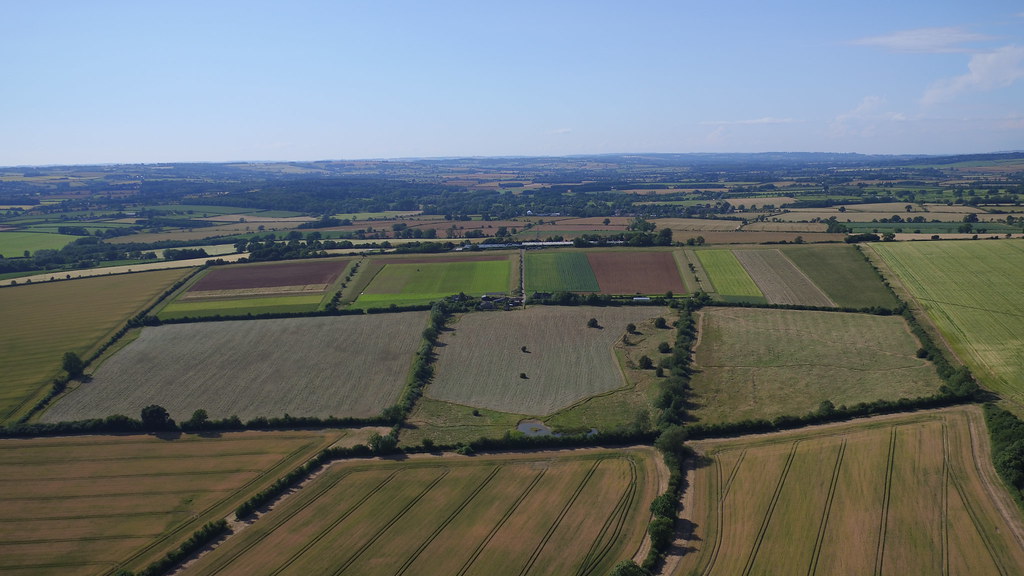
Crimper Roller Experiment - Rain Stops Play!

Our crimper roller experiment has been hampered by the heavy rain this week. It’s just been too wet for us to get out into the field without risking damage to the soil and crops. We’re hoping it will dry up soon so that we can resume.


Let It Bee!


The two hives at Honeydale have been under close supervision for the past couple of weeks and today we performed another inspection on hive 1, the hive which is not under special measures. We did not find a queen but an empty queen cup was discovered, having been vacated by an emerging queen. The rest of the hive was also displaying behaviour which indicated that a queen has recently been produced and will soon be laying eggs. Polished brood cells were found which indicates that she is probably off mating and will soon return to the hive, when it will be business as usual. Once she is back we will find her and mark her with a coloured spot.

During the inspection, bee mentor Chris Wells removed a sealed queen cup with a virgin queen inside which was set aside. Other sealed queen cups were found but the queens inside had been killed by the emerged queen.

The second super is now also full, so we have added another super and another lift, meaning this hive now has three supers on it and around 20kg of honey so far.

We also performed an inspection of hive 2 - the one in special measures. Bee numbers were vastly reduced and many emerged queen cups were found, though no sign of the actual queen, suggesting this hive has swarmed, or at least has tried to. It is possible that one of the the swarms found last week was from this hive. We left a sealed queen cup in situ to allow a new queen to be produced and the hive can continue to develop as normal. As an insurance policy, should the queen cup fail to successfully hatch a queen, we introduced the virgin queen from hive 1 into hive 2. This hive will be inspected again in a week or so to see what happens next.


We then turned our attention to the swarns. The main swarm box, in which we placed a brood frame from hive 1, has lost some bees but there are still a healthy number remaining. We were unable to find a queen but the the temper of the colony and 'fanning' behaviour of the bees suggested there was one present somewhere. We are leaving it alone for now, to see if the colony develops and if a queen is apparent next time we inspect. The best case scenario is that we end up with another colony and therefore can start another hive, although it’s quite unlikely this colony will survive if there is no queen. We’ll inspect again next week and see if we can find the elusive queen.

The other box was empty so this swarm has been lost and similarly the swarm left in the tree has moved on.

But there will definitely be more bees arriving at Honeydale this week. The Sainfoin has just begun to flower and and the bees are flocking to it like...well, like bees round a honeypot! Sainfoin is such a popular plant for bees and produces some of the best honey, so Chris has been eagerly waiting for it to bloom and now that it has, he will be installing five of his own hives in our apiary.

Crimper Roller Take Three


In the third stage of our No Till Crimper Roller experiment, we continue to hunt for that 'Goldilocks Moment' - when is the perfect time to crimp our rye/vetch crop?

This week we attached a seed drill onto the back of the roller as an experiment. When the crop is successfully flattened the next stage will be to incorporate the next seeds through the sward and into the soil, either by drilling or broadcasting.

As you’ll see, the drill proved problematic, which could have been due to the wet weather, or the crop’s lack of maturity, or just because the particular drill we used was not suitable.

We’ll be having another go next week when we will also be rolling again in our continuing quest to find out whether it’s going to be possible to use this innovative technique across fields in the UK.

Mob Grazing Update


In another experiment at the farm, Sam ‘Macca’ McPherson from the Cotswold Seeds’ warehouse was keen to broaden his experience at the farm. He owns a small flock of rare Texels sheep and his father is a stockman at the Sezincote Estate, so he’s putting this background to good use. Here Ian and Macca chat about the mob grazing system at Honeydale Farm, which is just coming to the end of its first 'cycle' on the Cotswold Seeds Herbal Ley.

Bee-Ware!

When Paul arrived at Honeydale Farm to check the bees this weekend he found thousands of them swarming all over the apiary and immediately contacted beekeeping mentor Chris Wells for advice.

Swarming is natural and common at this time of year. In fact Chris said that it had been ‘a very swarmy day.’ In a normal year, this behaviour is managed by regular monitoring, and an artificial swarm can be carried out if necessary. What’s complicated the situation at Honeydale is that the bees have been behaving unpredictably all Spring due to the mild winter, cool March/April and erratic weather ever since, so monitoring them has been tricky and swarming difficult to predict.


Two swarms were found hanging from branches in the trees behind the hives, the largest one 3m high. One of the hives is being left alone while a new queen is created, so Paul’s first task was to perform an inspection of the other hive. He destroyed the incomplete queen cups but left the fully formed ones in situ as they will be needed if this hive proves to be the one that has swarmed and thereby lost its queen. Paul didn’t find the queen in the hive, but the good news is that there were still plenty of bees.

Paul then needed to gather the swarms. He took a brood frame from the strongest hive and put this into an empty nuc box - the containers in which nucleuses of bees first arrived at Honeydale, which Paul had fortuitously kept. Chris Wells had told him that any cardboard box would suffice, effectively mimicking the traditional bee skep, domed baskets which were used by beekeepers for centuries.


Paul had to climb on the top of the pick up truck to reach the main swarm which he shook off the tree into the nuc box. He placed this upside down on the ground at the base of the tree before he repeated the procedure with the other smaller swarm.

He left the boxes to settle and noticed a third swarm in another tree. This has been left alone until Chris visits with Paul early next week to decide what best to do next.

Sainfoin at Honeydale


Our Sainfoin field is doing very well and is now coming into flower; a beautiful sight. The seed was drilled last June into a new, clean seedbed after ploughing and pressing the field. We later broadcast a companion grass mixture containing Timothy and Meadow Fescue on top of the seedbed, rolling it in to ensure establishment.

Being such an upright plant, Sainfoin doesn't provide a huge amount of weed smothering so a grass companion crop is needed to fill up the sward. It also increases the overall biomass of the crop to produce a better yield.

Looking forward, we can use the crop for haylage with the option to take seed from it at a later date.


Crimper Roller Update


The second episode of the No Till Crimper Roller series follows on from week one where we established the crop was a little to under-developed to crimp yet. We continue to hunt for the ‘Goldilocks Moment’ where the Roller will destroy the crop before it turns to seed. We didn’t kill the rye and vetch in week 1 so will we succeed in week 2?

Join us next week for more, where we will be attaching a drill onto the back of the crimper roller to drill in the next crop as soon as the previous one has been crimped (And hopefully destroyed).

At this stage we are still deciding which crop to drill in, and would love to hear from you which plants you think we should drill in right after the rye/vetch mixture is destroyed.


The Bees This Week

Paul checked out the bees again on Friday. One hive was left untouched as planned, while the new queen is being raised, but a full inspection was carried out on the second hive. The queen here has somehow lost her blue identification spot! This is a blue ink marker which is dabbed on gently; it’s a technique used amongst beekeepers to help make the queen easier to find and to record which year she was reared, but it’s pretty low tech and we are not sure where it went. Anyway, Paul was still able to find her and she is doing well, healthy and laying eggs. Even more excitingly, the bees have now one-third filled the second super (you'll remember that last week they had filled their first super). So that's really good going. They are still in swarming mood though and Paul had to remove another handful of new queen cups, but there were less drones than previously which is positive. If they continue trying to swarm an artificial swarm might have to be performed soon.

It's Swarming Up


Last week we reported that the bees at Honeydale were behaving rather strangely with one hive bursting with bees and the bees in the second hive preparing to swarm.

Paul’s beekeeping mentor Chris Wells has now been to assess the situation which has moved on a pace.

The hive that was full of bees last week, has now completely filled the extra super Paul added last week with approximately 10kg of honey. So yet another super has been added. The nearby rape fields are likely to be the reason for this early bounty. The bees in this hive are also now trying to swarm with lots of queen cups, some of which are sealed in readiness for a new queen to be created. The queen cups have therefore been removed and we are keeping a close eye, checking the hive every seven days to prevent swarming. If the colony continues to try and swarm, then we will need to perform an artificial swarm to maintain the colony.

The second, previously emptier hive, in which the bees were also preparing to swarm a week ago is still trying to swarm but the queen has been lost or has died and as a result the bees are behaving quite aggressively. Some of the brood frames have been removed and replaced with empty frames to provide more space and the queen cups here have been left in place so that a new queen can be created. Honey production will be delayed for at least three weeks and the hive will not be opened during this time, but otherwise the hive is active and healthy, if a little perturbed.

Overall there is a healthy number of bees in the hives and things are looking good. In light of the recent honey production and good weather we now need to increase the height of our ‘WBC’ hives to accommodate more supers as the season progresses and honey production continues. Paul will be ordering in the necessary items and building the extensions soon.

US Technology in the Cotswolds


The No Till Crimper Roller is standard farm machinery in arable America but as far as we are aware our experiment at Honeydale Farm this weekend is among the first times that one has been used in the UK.


As the name implies, the Crimper Roller offers a way of terminating cover crops with no till; by avoiding the need for spraying, mowing and ploughing, it’s a much cheaper and faster method. It relies on having a bulky cover crop which is then crushed, the flattened plants forming a mulch on top of the soil which keeps weeds at bay and also allows new seeds to come through. Ingenious!

This weekend marked our first attempt at controlling our winter cover crop of rye and vetch. The trick is to find the ‘Goldilocks Moment’ when the plants are just right to terminate, in other words when they are old enough to remain flat once rolled, but not too old to seed. 

We have rolled one trial strip in our cover crop to start with but as we suspected, we were a little too early and some of the plants may recover. We will be repeating the process weekly until we have determined the correct stage to terminate, so tune in next Monday to find out what happens!