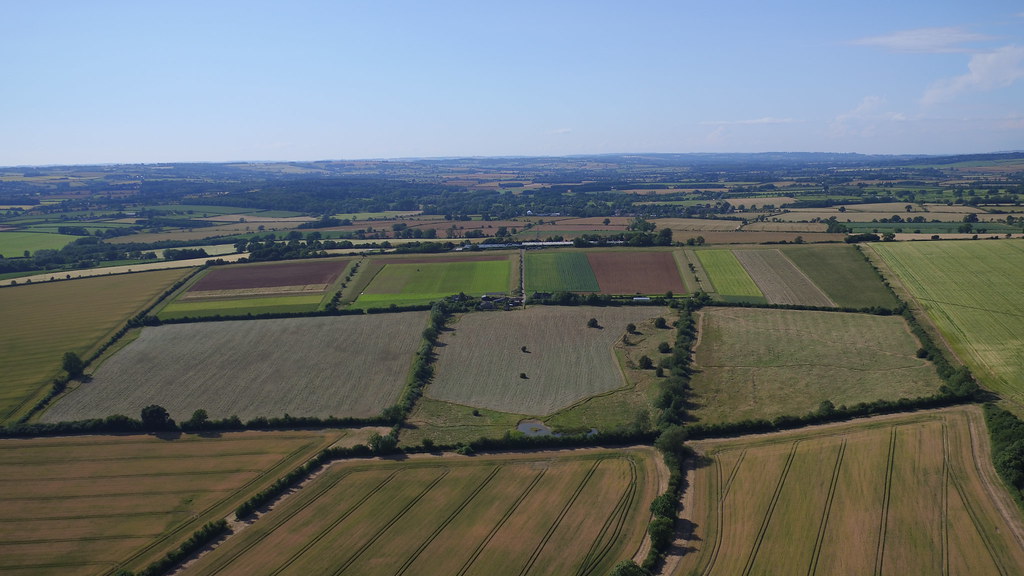
Showing posts with label Machinery. Show all posts

Benchmark Barley

Our control plots of Spring Barley have been sprayed with glyphosate to control creeping sow thistle and barley volunteers (grains that fell off during combining and germinated). This is standard agricultural practice before sowing the next crop. At Honeydale the spring barley is followed by a cover crop of mustard, but we’ve only sprayed the 4 acre control plots in line with our policy of continuing to farm these areas just as they’ve been farmed for many years, since long before we took over Honeydale. We are not using this method on the rest of the farm though, as we are exploring alternatives that don’t depend on costly inputs. The aim is to use the control plots as a benchmark in order to compare different management methods, so we are handing the costs and other data over to James, our farm analyst, and are looking forward to seeing the results.

On Your Bike!


We’ve been drilling Ryegrass (Westerwold) and vetch at Honeydale Farm today before the rain forecast for this weekend. It’s to provide ground cover over winter and grazing for sheep. In order to establish grass in the autumn the seedbed needs to be firm before and after sowing. According to an old wives’ tale, it needs to be firm enough to ride a bike across.


The End Of Summer

The last few weeks have been very busy ones at Honeydale. Not only have we been haymaking and harvesting but we’ve also been progressing with plans for the development of Honeydale as a Centre for Food and Farming Diversity.


Sainfoin

We’re letting our field of sainfoin go to seed with a plan to harvest it for retail. The seeds are beginning to ripen, albeit unevenly, but we are hoping it will be ready to direct combine at the end of September. It’s a special landrace selection which offers fantastic diversity, selected over many generations. Unlike bred strains with are chosen for their stability, this variety of sainfoin has been given the epigenetic freedom to adapt to its local environment.

It will be very satisfying to see the seeds harvested at Honeydale for sale through Cotswold Seeds next year.


Buckwheat

We undersowed herbal ley to buckwheat to act as a nurse crop to protect the herbal ley from hot weather while it establishes, especially important on our thin, free draining soils. It was sown seven weeks ago at 10 kilos an acre of buckwheat and as you can see from the below the herbal ley has taken wonderfully well. We’re not going to graze the sheep on it, because we’re not certain how they will take to the buckwheat, so we ran the topper over it this week to allow the light to get to the herbal ley for regrowth. We’ve also left a trial strip of buckwheat so that we can observe what happens if we don’t top it. 


Combining the Wheat

Like many farmers, there was no rest for Sam over the hot and sunny bank holiday weekend. He was busy combining the wheat. As part of our rotation it was late sown in May, undersown with trefoil and white clover for the sheep to graze in spring.

We achieved a yield of 1.4 tons an acre, which we’re very happy with, given that it was a zero input/no cost crop. The financial data is being professionally monitored by Farm Business Analyst James Turner from Strutt & Parker which will enable us to compare the new rotation with the control plots from the previous conventional, high cost/input system.

We were hoping to combine the oats too, but they weren’t quite ready.


Haymaking

Two permanent grass fields, fifteen acres each of ridge and furrow, have been cut for hay. It’s been baled and Sam has been tedding it for the past 4-5 days. Weather permitting, it might only need a couple more turns and then it will be ready to bale and feed to sheep and cattle over the winter.


Wildbird and sunflower seed mix

This was thin when it was sown in April because of the dry weather, but it’s looking a bit better now, and getting plenty of interest from our farmland birds already.


Dry-stonewalling

H and Kelvin from local dry stone walling and fencing company ‘Sticks & Stones’ have been carrying on with the building of the wall at the entrance of Honeydale and it’s progressing slowly but steadily. It’s highly skilled and painstaking work and we could of course have just erected a fence here. But limestone walls are so quintessentially Cotswold and there was a wall at the entrance of Honeydale which had fallen down, so we wanted to rebuild it reusing the old stone.


Development of Honeydale

We’ve been working closely with architects and West Oxfordshire District Council to progress the plans for the development of Honeydale. We’re currently at pre-application stage and Tim and Chris, our architects, are now drawing up visualisations, taking great care that replacement farm buildings will be perfectly in-keeping with the landscape of the Cotswold Area of Outstanding Natural Beauty. 


Exciting times.

Combining the Control Plots & Sowing for Winter


This weekend we took advantage of a break in the weather and combined our control plots of spring barley. Since we took over Honeydale four years ago, we have conventionally farmed the two plots totalling 4.6 acres in just the same way they had been managed for decades by the previous owners.


We were delayed slightly by a flat tyre and a slipping belt on the combine, but after we inflated the tyre and re-tensioned the belt we were off. It took us three hours to get the crop in, and it’s now gone to the Adams farm as we have no way of processing it, yet. We have a perennial sowthistle problem in the spring barley plots, which restricts the yield. We harvested 4.5 tons, so about a ton per acre, which is not great, considering the cost of inputs - we used 2 herbicides, broadleaf and graminicide, nitrogen fertiliser and a fungicide.

Away from these control plots, we’re using the time honoured low input/low risk method of farming, and are keeping detailed records of the results to make a proper comparison. Watch this space.


As part of our eight year rotation, we sowed stubble turnips and forage rape for the sheep to graze on over winter, once the grass in the ley has stopped growing. It will also prepare the way for spring wheat which will be sown next spring.

As we found the crop a bit lacking last year we also mixed in some crimson clover to add nitrogen to the soil and to provide a higher protein content in the forage. This is not standard practice but as we are still building soil fertility we’re making use of any opportunity to put in soil improving legumes.

We are still experimenting with the shallow plough but it didn’t work too well, as it wasn’t inverting the old ley, so we had to use the conventional deep plough on this occasion. But we’ll keep persevering with the shallow plough until we perfect the technique.


Running Repairs

As part of our rotation of fertility building grass leys and cereals, an area of ley is ploughed up every year and planted in the spring with a cash crop to make the most of the soil fertility we have built up over the last 3/4 years. Once the ley is ploughed, it has a pass with a secondary cultivator like this one (pictured) to break up the ground and create a seed bed for a break crop which will be a short term cover of stubble turnips for winter sheep keep and to help the old grass ley to break down before the spring sowing.


However, before cultivating, we made sure the machine would do the best job possible by replacing any worn parts and renewing some of the tines.

We hope to plant the stubble turnips in the coming weeks, weather permitting.

Making Sainfoin Hay While the Sun Shines

In the Cotswolds a hundred years ago, sainfoin was grown in one in seven fields, for hay, forage and soil improvement. It’s almost died out now due to high input farming. However, our high pH of 7.8 and free-draining, brashy soil in the Cotswolds is perfectly suited to Sainfoin, so we decided to grow it, with the aim of producing a hay crop. 


It was sown two years ago, in Spring 2015, into a prepared seedbed, rather than under-sowing with a cereal crop. It was sown at 35 kilos an acre with a cereal drill. Because the plan was always to cut the crop for hay we also sowed it with a low rate of companion grasses, meadow fescue and Timothy, at 3 kilos an acre to help reduce the weeds and increase yield.

It was cut last Tuesday and with good hot weather and a stiff breeze, it was ready to bale after five days. The critical part of the whole operation was to dry the crop without losing the sainfoin leaves which improve the quality and the appearance of the bale, but which can become brittle during the drying process. After tedding the crop out, post mowing ,we used an old-fashioned ‘Acrobat’ with a gentle turning action which worked well.

We’ve produced over a thousand bales from ten acres and we are now looking to sell it in to several specialist markets.

Intercropping Oats

It was a wet but busy weekend at Honeydale. Last year we under sowed wheat with a yellow trefoil and white clover winter cover crop, and this year we’ve direct drilled spring oats into the yellow trefoil and white clover. We’re now been topping it with mob-grazed sheep which works on two levels, saving us from having to roll it and also adding fertility to the land through the sheep’s dung. It’s the first time these fields have had livestock on them for decades so we’re looking forward to seeing an improvement.


Buckwheat & Barley Mow

A Novel Old Idea From Arthur Young

We’ve sown buckwheat as a companion crop for the herbal ley in the first reseed of our new mixed farming rotation. The large leaves of the buckwheat act like an umbrella, effectively shielding and protecting the new ley and stopping the sun burning down on the bare soil and drying it out fast as the seedlings come through. The buckwheat will then be killed off by winter frosts, leaving only the grass. It’s an ingenious method but it’s actually an old technique, observed and recorded by agricultural writer Arthur Young back in the 1800s.

Before sowing the grass we sowed the buckwheat at a rate of 20 kilos per acre. At this rate the buckwheat was open enough to leave space for the grass. If it was denser, the grass would be smothered and at 15 kilos per acre, our first sowing, it was too light.


Barley Mow

Our combine has been busy. We retained four acres of spring barley which we’ve managed just as the previous farmer at Honeydale had done in order to give a controlled measurement, against which to gauge changes we’re implementing. The yield was similar to the previous years at 1.5 tonnes per acre. As we only had 6 tonnes of grain we’ve delivered this to the neighbouring livestock farmer who will be able to mill and mix it for winter feed. Next up for combining are the spring oats which we hope to be able to make into porridge.

Crimper Roller Take Three


In the third stage of our No Till Crimper Roller experiment, we continue to hunt for that 'Goldilocks Moment' - when is the perfect time to crimp our rye/vetch crop?

This week we attached a seed drill onto the back of the roller as an experiment. When the crop is successfully flattened the next stage will be to incorporate the next seeds through the sward and into the soil, either by drilling or broadcasting.

As you’ll see, the drill proved problematic, which could have been due to the wet weather, or the crop’s lack of maturity, or just because the particular drill we used was not suitable.

We’ll be having another go next week when we will also be rolling again in our continuing quest to find out whether it’s going to be possible to use this innovative technique across fields in the UK.

Crimper Roller Update


The second episode of the No Till Crimper Roller series follows on from week one where we established the crop was a little to under-developed to crimp yet. We continue to hunt for the ‘Goldilocks Moment’ where the Roller will destroy the crop before it turns to seed. We didn’t kill the rye and vetch in week 1 so will we succeed in week 2?

Join us next week for more, where we will be attaching a drill onto the back of the crimper roller to drill in the next crop as soon as the previous one has been crimped (And hopefully destroyed).

At this stage we are still deciding which crop to drill in, and would love to hear from you which plants you think we should drill in right after the rye/vetch mixture is destroyed.


US Technology in the Cotswolds


The No Till Crimper Roller is standard farm machinery in arable America but as far as we are aware our experiment at Honeydale Farm this weekend is among the first times that one has been used in the UK.


As the name implies, the Crimper Roller offers a way of terminating cover crops with no till; by avoiding the need for spraying, mowing and ploughing, it’s a much cheaper and faster method. It relies on having a bulky cover crop which is then crushed, the flattened plants forming a mulch on top of the soil which keeps weeds at bay and also allows new seeds to come through. Ingenious!

This weekend marked our first attempt at controlling our winter cover crop of rye and vetch. The trick is to find the ‘Goldilocks Moment’ when the plants are just right to terminate, in other words when they are old enough to remain flat once rolled, but not too old to seed. 

We have rolled one trial strip in our cover crop to start with but as we suspected, we were a little too early and some of the plants may recover. We will be repeating the process weekly until we have determined the correct stage to terminate, so tune in next Monday to find out what happens!

Combined Effort & A Quick Fix

The combine harvester we bought earlier in the year had its first outing last week, when we brought in the spring barley.

The sun was shining, all was running sweetly and we filled our first tank with grain. But then we could unload no more, due to a problem with the unloading auger.


Anyone who’s tried to repair a combine will know how difficult it is just to get access to anything. We were soon covered in prickly ears of barley and baking in the hot sun, listening to the taunting hum of fully-functioning combines busy at work on the neighbouring farms.

After several hours we had to admit defeat and called in the local engineer from Cotswold Combines. He visited the following morning, diagnosed a broken bearing in the unloading auger, and had it up and running within a couple of hours. The only trouble was the rain, which forced us to postpone harvesting the rest of the barley.

A week later we were able to finish the job, with a good yield of 1.8 tons per acre with 15% moisture content. We’ve sold the barley to a local farmer for feed and we shall be baling the barley straw, probably for bedding and feeding to sheep.

Our main reason for growing spring barley though, it that it’s traditionally been grown at Honeydale and though we’ve diversified with various other crops and mixtures, we wanted to retain a small acreage of the original crop to benchmark ‘before and after’ soil conditions.

On the subject of quick fixes,we’ve been experimenting with a method of soil improvement in the form of over winter green manure which we believe has been used little in the UK in recent times. We sowed our Summer Quick Fix, comprising mustard and legumes, in one of the fields and it’s grown well, smothering weeds and creating double the density of a trial brassica mix of radish and mustard. We’ve now purchased a crimper/roller with blades and will use it to flatten and cut some of the green manures before drilling with rye and vetch to protect the soil over winter..

Natural Flood Management & Other News

Natural Flood Management


Last winter we created a natural flood management feature to hold up water flow at peak times from the spring and reduce the input into the River Evenlode. The feature also created a more diverse wetland habitat at Honeydale and provides a small scale, working example of how this type of flood management can be implemented on wider catchments in the UK. The Cotswold Rivers Trust under the guidance of waterways management specialist Vaughan Lewis, returned to Honeydale a few weeks ago to carry out some improvements, having observed how it’s performed so far. They dug deeper into the bottom pond to increased it’s capacity and have introduced aquatic plants, including iris and sedge, to improve habitats. We look forward to seeing how the water course reacts this winter when the flow is higher.


Other News


We’ve bought a set of cultivation disks so that we can experiment with shallow soil cultivation techniques and weed control. The idea is to look at how traditional cultivation techniques can be utilised to remove weeds, with a lower reliance on chemical methods of weed control. So far we have noted that to get a reasonably weed free seedbed, the ground must be disced two to three times before sowing, set at a shallow depth to cut weed roots without moving excess soil and bringing up more weed seeds.

The ewes and lambs were sheared just before the weather warmed up and are grazing well on our permanent grassland.


We are planning to establish an orchard in November in the twelve acre grass field, with three hundred mixed fruit trees and an ‘orchard within an orchard’ of denser, shorter trees for children. The aim is that the orchard can be used for education at all ages, from schoolchildren to students studying orchard maintenance. 

Ploughing

The fields where spring barley was formerly grown on Honeydale were ploughed a couple of weeks ago by Nigel Adams. We will be sowing sainfoin, herbal leys, green manures and experimental seed plots over the next few weeks, once we have obtained suitable seed beds and the weather consistently warms up.


I Got a Brand New Combine Harvester…

...so The Wurzels famously sang. Well this shiny red Massey Ferguson 16 is certainly new to us, but it’s actually 25 years old.


Harry, as we have named him, arrived at Cotswold Honeydale Farm on a grey, rainy day in March and we’ve not even started sowing the fields yet. He’ll be spending the next few months in the bar. But we’re very pleased to have him, as you can see from Sam’s smile!

Most farmers require maximum capacity combining, but since we will be growing research plots for our seed mixtures, we needed a combine capable of dealing with small areas. So when we saw this one advertised on EBay, we couldn’t resist having it transported up from Dorset.

‘I got a brand new combine harvester and I’ll give you the key.’ That song charted back in the record breaking hot summer of 1976. So here’s hoping for some sunshine soon, and a good growing season.

July-August

Making Hay and Combining Barley:

We’ve brought in our first Honeydale harvest. Definitely the most important events that have taken place on the farm over the past few weeks has been the hay-making in July and combining the barley earlier this month.


Nigel Adams, who grazes his sheep at Honeydale, brought his mower and tractor to cut and bale the hay meadow which produced 130 round bales and a further 40 small bales. The hay was cut on one of the many hot sunny days, so conditions were ideal, and Nigel was pleased that it made really well and was of good quality to use as animal fodder for the winter.

Our malting barley was combined with the help of the Swinbrook estate who arrived with two big tractors and trailers and a 10.5 metre combine complete with drivers. 


I told Jim, who farmed Honeydale for many years before we took it over last year, that the combine was on its way and he was very excited and pleased that our first harvest had been successful. The barley straw has now been baled and sold on to farmers in Wales for livestock bedding, as we don’t have a requirement for it.


This means that the 12 month baseline cycle we have been following in order to observe the established practices on the farm before deciding what changes to make is now complete.

What’s particularly important about the barley for us is that it has only been in the ground for four and a half months. During the rest of the year the pattern has been for this field to be left as stubble. While this is an easy and low input method of farming it means that the soil has been left inactive for nearly three quarters of the year and this is something we’re going to change, starting from now. We’re planning to grow as much green matter as possible, to improve the soil and produce greater quantities of food. We’re looking at what we can grow to best improve the fertility and what can be achieved if the soil is more active.

The good thing about the stubble was that the skylarks and hares liked it, but we will still continue to provide some of this habitat on the farm.

Polytunnel

Living on Honeydale over the summer months, I’ve had chance to see what’s been growing in the polytunnel and observe the changes on daily basis.

Earlier in the year we tried to plant a selection of the seeds we sell at Cotswold Grass Seeds and it’s particularly pleasing to see that the sainfoin has established well. There’s a noticeable difference between the growth habitat of some plants with the majority having a large rosette of basal leaves, while some have put up ‘heads’ and are in flower.

The majority of the cover crop examples have also taken and the cornfield annuals have flowered well. The buckwheat was the first to get going and has now gone over, making way for other species such as borage and annuals like crimson and persian clover.

Unfortunately, most of the brassicas have been badly affected by flea beetle which even struck the mustard and fodder radish which flowered early and are now setting seed.


The dwarf sorghum and millet got away quickly though and the sunflower and quinoa are catching up.

From our spring sowing the earliest wildflowers to bloom were the hawkbit, musk mallow and yellow trefoil while the self heal and lady bedstraw are just starting to come into flower now. The yellow rattle and cowslip did not germinate because they need to go through vernalisation (cold snap) first.

Outside the tunnel, I’ve spotted a clutch of 5 partridge chicks at the top of the drive. They’re very young and not flying yet.

As autumn approaches we’re planning on re-directing the watercourse in the middle field away from the hedge and into several shallow pools to create a feature and create better habitats for wildlife.

March

Jim and Wendy had sown malting barley, a relatively low input crop, for many years so we thought we’d continue to observe the land by sowing the same again. Sam cultivated and drilled the barley in the middle of March, we settled on the tried and tested ‘Tipple’ variety with the hope that it will make the malting premium at harvest it was then a case of rolling in and leaving. N fertiliser and a grass weed and broadleaf herbicide application to follow in in April.


Ian Wilkinson